There’s a particular loneliness that comes from sitting in a room full of people who love you and still feeling like you don’t quite belong.
Many single Christians know it well. You arrive at church, and the sermon illustration is about marriage again. The small groups are organised around couples and young families. The well-meaning questions arrive on schedule. Are you seeing anyone? Have you tried the apps? Don’t worry, your person is out there. And underneath all of it runs a message, rarely spoken aloud yet felt in the bones: you are not yet complete. You’re in the waiting room. Real life, the life that counts, begins when you find someone and settle down.
For some, the waiting room lasts a few years. For others, it stretches across decades. For some, by choice or circumstance or loss, it lasts a lifetime. And the ache is real. The longing for partnership is good and human and worth honouring. Layered on top of that longing, though, is a second wound, one the church itself has inflicted: the subtle suggestion that a single life is a lesser life, a holding pattern, a story still waiting for its real beginning.
Something has gone badly wrong here, and it goes deeper than awkward small talk. The church has absorbed an assumption the wider culture taught it, then baptised that assumption and preached it back as gospel. We’ve made an idol of marriage. And in doing so, we’ve lost something the Scriptures hold dear, and we’ve wounded some of the people Jesus loves most.
The Idol in the Sanctuary
Many churches have made marriage and the nuclear family the centre of their vision of the good life. The family gets celebrated from the platform, written into the mission statements, treated as the goal every young believer should be moving toward. Sermons on Ephesians 5 outnumber sermons on singleness a hundred to one. The married-with-children household becomes the unspoken standard of spiritual maturity, the picture of what a flourishing Christian life looks like.
None of this comes from malice. It grows from good things: love of family, concern for strained marriages, a desire to support parents. The instinct to honour marriage is right and good. Trouble comes when honour curdles into idolatry, when a good gift gets treated as the highest good, when the church starts to act as though the family is the thing it exists to serve.
Yet the cost falls hardest on the people who don’t fit the picture. The single. The widowed. The divorced. The person who longed to marry and never did. The one whose marriage ended in grief. To all of them, the marriage-obsessed church says, often without meaning to, that they’re standing at the edge of the real thing, looking in.
The Unmarried Christ
Here is the truth that should reshape everything. The most complete human life ever lived was a single one.
Jesus never married. The One Christians follow as the pattern of all true humanity lived and died unmarried, without a spouse or children. If singleness were a deficiency, a lesser state, a holding pattern before real life begins, then the life of Jesus makes no sense at all. The Word made flesh shows us that a human life can be whole, fruitful, and overflowing with love, entirely apart from marriage.
Paul, who carried the gospel across the ancient world, was single too. And when Paul wrote to the Corinthians about marriage and singleness, the verdict was startling. Paul described singleness as a good and desirable way of life, one that frees a person for undivided devotion to the Lord. “I wish that all were as I myself am,” Paul wrote, before adding a phrase worth dwelling on: “each has a particular gift from God.”
The Greek word there is charisma. A grace-gift. The same family of words used for the gifts of the Spirit poured out on the church. Paul placed marriage and singleness side by side and called each one a charisma, a gift of grace from a generous God. Singleness, in Paul’s vision, is a grace to be received and lived into.
And Jesus redrew the lines of family altogether. When word came that Jesus’s mother and brothers were waiting outside, Jesus looked at the people gathered around and asked, “Who are my mother and my brothers?” Then came the answer that relativised every bloodline: “Whoever does the will of God is my brother and sister and mother.” The deepest family, Jesus taught, is the one formed by the shared life of the kingdom, the whole company of those who do the will of God.
If this strikes a chord, I go further into it on The Graham Joseph Hill Podcast, available wherever you get your podcasts.
A Sign of the World to Come
There’s a deeper truth still, one the contemplatives understood, and it turns the whole question on its head.
Marriage is good and beautiful. The Scriptures speak of it as a living sign of the love between Christ and the church, a parable in flesh and vow of the union God desires with us. Like every signpost, it points to a destination greater than itself.
This is where singleness carries its own startling dignity. Jesus once said that in the resurrection, people will neither marry nor be given in marriage. In the life of the age to come, the marriages that meant so much will open into a deeper and wider communion, a love that holds everyone in the embrace of God. Which means the single person, even now, bears witness to that coming world. A life given wholly to God is a sign, even now, of the way things will be when love is made complete.
The contemplatives knew this in their bones. Across the centuries, countless women and men gave themselves to God in lives of consecrated singleness, and they were among the most fruitful, most loving, most alive human beings the church has ever produced. They found in their singleness a freedom to love widely, a heart undivided, a life wholly available to God and neighbour.
The Cure for Loneliness
Loneliness deserves an honest word, because it sits in so many hearts.
The ache of loneliness is real, and singleness can carry it. So can marriage. Plenty of people lie awake beside a spouse and feel utterly alone. The hard truth is that the hollow place in us was carved out for God and for the whole community of God’s people. A single human relationship, however good, can carry only part of that weight. When we ask marriage to bear all of it, to be the one cure for loneliness, we crush it.
The answer the gospel offers is a different one, and the church has largely forgotten how to give it. We belong to a family. The body of Christ is a household, a community of sisters and brothers bound together by something stronger than blood. In that family, the single and the married, the young and the old, the widow and the orphan and the lonely, all find a place at one table.
This is the calling the church has neglected. We were meant to be the place where the single person is fully at home, woven into a web of relationships deep enough to hold a whole life. We were meant to be the family with no edges, where no one eats alone, where the love of God takes on hands and faces and shared meals and Tuesday phone calls. When the church becomes that kind of family, the loneliness of the single person finds its truest answer, and so does the loneliness of everyone else.
Becoming the Family
So what do we do? The change begins in concrete, ordinary ways, and any of us can start.
If you lead, examine the assumptions baked into your preaching, your programs, your language. Honour singleness from the platform as a full and faithful way of following Jesus. Tell the stories of single saints. Build a community where every person belongs fully, single or married.
If you’re married, widen your table. Pull the single people in your church into the heart of your life, welcoming them as family, not as projects to be fixed or matched. Invite them into your home, your holidays, your ordinary weeks. Let your children call them aunt and uncle.
And if you’re single, receive your life as the gift it is. Pour it out in love. Build deep friendships. Give yourself to the community of God’s people, and let yourself be loved by them. Set down the lie that you are waiting for your real life to begin. Your real life is already here, already overflowing with the chance to love God and others with an undivided heart.
Here’s the question to sit with this week: what would your church look like if single people were treated as a full and flourishing part of the family of God, exactly as they are?
I’d love to hear your story. Share it in the comments, and pass this along to someone who needs to know they belong.
And if you’d like to go deeper, I explore this whole subject at greater length on The Graham Joseph Hill Podcast. You’ll find a longer, more in-depth conversation there on singleness, loneliness, and the family of God, wherever you get your podcasts.
____________________________________________________________
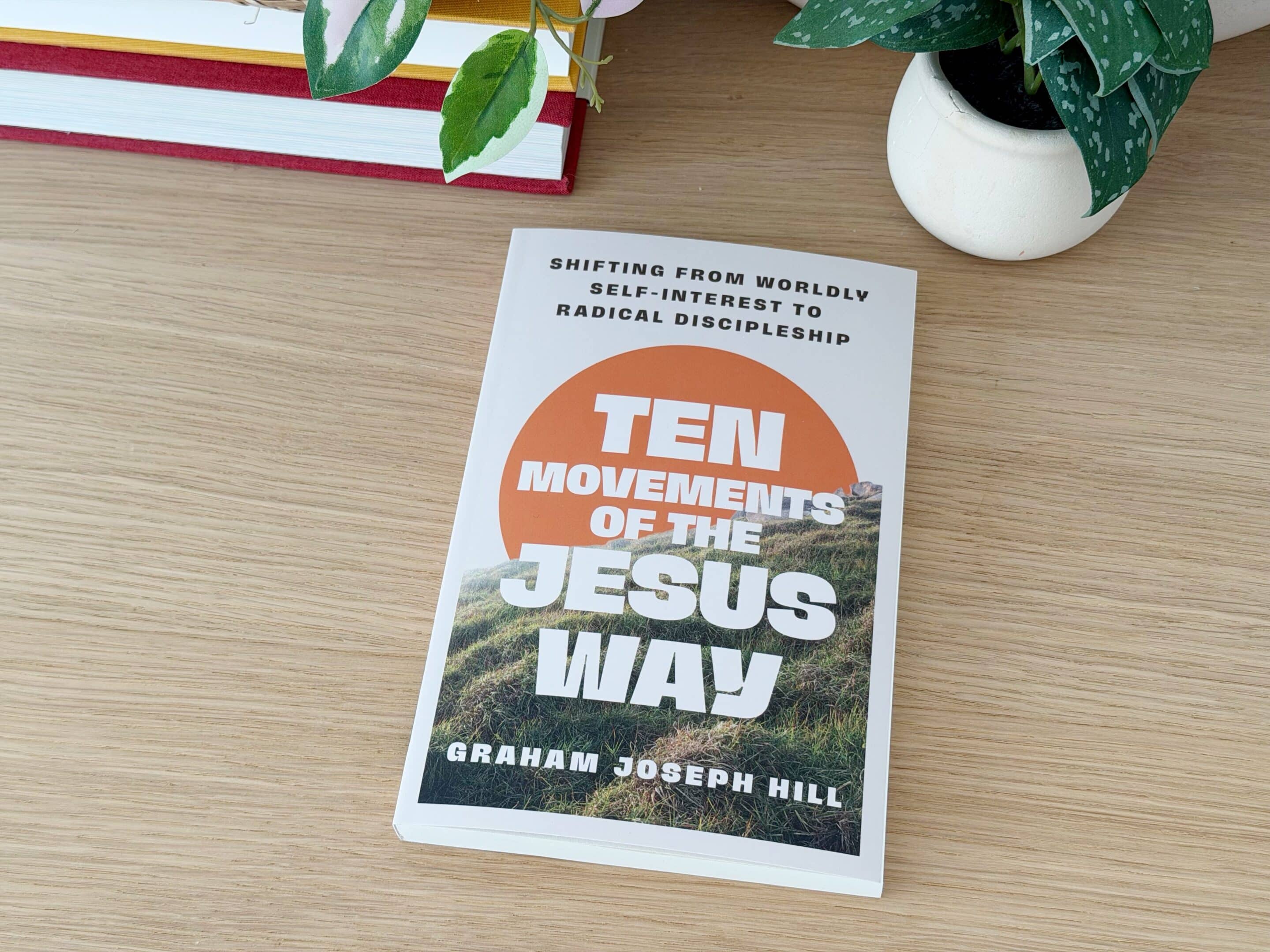
A new book for the journey: releasing July 28If something here has stirred you toward the way of Jesus, you might find a companion in my new book, Ten Movements of the Jesus Way: Shifting from Worldly Self-Interest to Radical Discipleship, releasing with IVP on July 28, 2026. We’re living in a fractured moment, pulled apart by political polarization, performative religion, consumerism, nationalism, and widening inequality. The book offers an alternative: the slow, countercultural, life-giving path of Jesus. Across ten movements, from material success to spiritual riches, from power to servanthood, from exclusion to embrace, it traces a discipleship shaped by humility, justice, generosity, and love. Rooted in Scripture and drawing on the wisdom of African, Asian, Indigenous, and Latin American Christian traditions, it’s a prophetic invitation back to the radical road Jesus walked, and a hopeful vision for a church longing to reflect Christ again. Every chapter closes with questions for reflection, making it a companion for personal devotion, book clubs, and small groups. Preorder your copy now at IVP, Amazon, Barnes & Noble, or Bookshop.org. Also available as an audiobook.
|
____________________________________________________________
Keep walking the Jesus Way: the podcastIf you’d like to go deeper, join me on The Graham Joseph Hill Podcast, where I explore the questions that matter most for Christians today through conversations about faith, justice, spirituality, theology, culture, and the global church. New episodes drop weekly. Listen and subscribe at – https://ghill8.podbean.com
|

Photo by Daniel Capelani on Unsplash