Almost everyone I meet is trying to prove something.
We’re proving we’re competent, so we answer the email at eleven at night. We’re proving we’re worth loving, so we perform a curated version of ourselves for people we barely know. We’re proving we’re on the right side, so we post the right opinion in the right voice at the right moment. And underneath the striving runs an exhausting suspicion, one most of us would never say out loud: that our worth is something we have to keep earning, and that we are one bad quarter, one wrong take, one exposed failure away from losing it.
Our culture has built a machine for this. Everything is measured now. Performance reviews and follower counts, the running tally of likes and shares, the algorithm that decides whether your work will be seen today. Even our rest gets optimised. And the machine has a shadow side that grows crueller by the year. Get it wrong in public and you can be sentenced, quickly and without appeal, to a kind of permanent unforgiveness. We’ve built a world with a long memory and a short mercy.
Which is why the oldest word in the Christian vocabulary lands like water on cracked ground. Grace. The unearned, unpayable, wildly generous favour of God toward people who have done nothing to deserve it. In a culture where everything must be earned and nothing is forgiven, grace is the most subversive word we have.
What Grace Actually Is
Let’s be precise, because grace is a word we use so often that it can go soft in our mouths.
The Greek word is charis. It means favour, gift, generosity freely given. In the ancient world it carried the sense of a benefactor bestowing something on someone who could never repay it. Paul takes that word and drives it to its limit. Grace, in Paul’s hands, is the free gift of God’s own self to people who have nothing to bring and no way to settle the account. You were dead, Paul tells the Ephesians, and God made you alive. By grace you have been saved, through faith, and this is the gift of God.
Notice where the initiative lies. Grace begins in God. It arrives before we ask, before we improve, before we get our lives together. While we were still weak, while we were still enemies, Paul says, Christ died for us. The gift comes first. Our response comes second, and it comes as gratitude for something already given.
The Hebrew Scriptures had already been singing this for centuries. The word chesed, that great untranslatable word, names the loyal, tender, steadfast love God keeps pouring out on a people who keep wandering away. Israel was chosen for no reason it could point to, rescued before it was righteous, and carried through the wilderness by a mercy it never managed to earn. The whole story is grace before it’s anything else.
And here’s the thing that makes grace so hard to receive. Grace is offensive to the part of us that wants to have earned it. Something in us would rather be worthy. We’d prefer a God who runs a fair exchange, where we put in the effort and take out the reward, because that leaves us in control and lets us keep a little pride. Grace takes the account book out of our hands and closes it. And the closing of that book is the beginning of freedom.
Grace with a Face
Christian grace is never an abstraction. It has a body, a name, and a set of scars.
John writes that the Word became flesh and lived among us, full of grace and truth, and that from the fullness of Christ we have all received grace upon grace. Grace arrives as a person. You can watch it walk around in the Gospels.
Watch it at a well in Samaria, where Jesus asks a woman with five failed marriages for a drink and offers living water in return. Watch it at a table full of tax collectors and sinners, the people the religious establishment had written off, with Jesus at the centre of the party, eating with them, which in that world meant something close to family. Watch it when a woman caught in adultery is thrown into the dust with stones already raised, and Jesus bends down, writes in the dirt, and sends the accusers away one by one until the stones lie unthrown on the ground. Watch it in the story Jesus told about a father who sees a wastrel child a long way off, and runs, which no dignified man in that culture would ever do, and throws both arms around the one who spent the inheritance, calling for a robe and a ring and a feast before the rehearsed apology is even finished.
And then watch it at the cross, where grace pays for itself. Here is the thing we forget when we call grace cheap. Grace is free to us and it cost God everything. The debt was real, and it was settled, and the settling happened in a body nailed to Roman wood. Grace is the most expensive gift ever given, handed over to people who could never afford it, at a price the giver absorbed in full.
Hanging there, in agony, Jesus prays for the executioners. Father, forgive them. That prayer is what grace looks like when it reaches the end of itself, and it holds when everything else falls away.
Living as People Who’ve Been Forgiven
Grace received becomes grace lived. A person who has truly been forgiven turns into a forgiving person, the way a warmed room warms whatever comes into it.
Let’s clear up a misunderstanding that has done real damage. People sometimes hear grace as permission to stay exactly as we are, a divine shrug that leaves us untouched. Grace runs the other way. It sets us free and it sets us to work. Paul, who fought harder than anyone to keep grace free, also wrote that the grace of God trains us to live differently, and said of a lifetime of furious labour that the grace of God was the one doing the working. Grace is the ground we stand on and the power that moves us. We work from acceptance, never for it, and that changes everything about how the work feels.
Jesus told a story with real teeth about this. A servant owed a king an unpayable fortune, and begged, and the king wiped the whole debt clean. That same servant walked straight out, found a colleague who owed a trivial sum, and had that colleague thrown into prison. The story lands like a slap. To receive an ocean of mercy and then ration out a teaspoon of it is to prove that we never understood the ocean at all. Forgiven people forgive. That’s the shape of a life that has actually taken grace in.
What does this look like on a Tuesday? It looks like refusing to keep a ledger on the people close to you. It looks like letting go of the grudge you’ve been feeding, the one you’ve half enjoyed keeping warm. It looks like giving someone the benefit of the doubt when the uncharitable interpretation would be easier and more satisfying.
It also looks like grace turned inward, toward yourself. Many sincere believers extend mercy to everyone except the person in the mirror, replaying old failures, keeping their own account open long after God has closed it. To receive grace is to let yourself be forgiven, to speak to your own tired heart the way Love speaks to you. A person still punishing themselves has little mercy left over for anyone else.
And grace shapes how we speak. In a culture fluent in contempt, gracious speech becomes a discipline. It means arguing without dehumanising. It means leaving people room to change their minds, and room to have been wrong. It means keeping the door open.
Communities of Grace
Grace was always meant to take social form. The New Testament imagines a community shaped by it, and that community is meant to be visible.
The early church became a place where the accounting of the world was suspended. Slaves and masters ate at one table. Jews and Gentiles, divided by centuries of hostility, were made one. Women found dignity. The poor were fed. Nobody had earned a place, and everybody had one. What the watching empire saw was a strange society where worth was given instead of achieved, and people found it magnetic.
A church living out of grace looks recognisable. It’s a place where you can tell the truth about your life without losing your seat at the table. Where confession is safe, because the response to failure is mercy and not exile. Where the newcomer is welcomed before they’re vetted, and the wanderer is met on the road while still a long way off. Where the leaders serve, having given up any pretence of being the ones who have it together. Where the poor are treated as those the gospel came for, and generosity flows out of the community into the neighbourhood.
The counterfeit is easy to spot, because most of us have been in it. Churches that preach grace and practise performance. Where the singing declares that all our righteousness is filthy rags and the culture demands that everyone appear to have their act together. Where the wounded learn quickly to hide the wound. A community like that can talk about grace endlessly and still starve people of it.
Grace also has hands. A community shaped by it feeds people, houses people, welcomes the refugee and the addict and the ex-prisoner, and works for a world where the vulnerable get treated as those God has already valued. Grace received leads out into justice, mercy, and generosity, because a people who’ve been given everything for free find it hard to hoard.
A Practice for the Week
Grace grows in us through practice, so let me offer something small and concrete.
First, receive. Take five minutes each morning this week to sit with one sentence: I am loved by God, and this love was never something I earned. Say it slowly. Let the striving in you go slack for a moment. Most of us are so busy performing for God that we never stop long enough to be given anything, and grace can only be received with open hands.
Second, give. Choose one person you’ve been keeping an account on, and close the book. You don’t have to pretend the wrong never happened. You only have to stop charging them for it. If you can, do something generous for someone who can offer you nothing in return, and tell no one you did it.
Third, make room. Look for the person on the edge of your community, the one who fits awkwardly, whose life is untidy, and offer them the same welcome you were given. Grace is meant to move. It comes to us in order to travel through us.
A world that keeps score is exhausting itself. Every day, people around us are running harder to prove a worth they suspect they might not have, bracing for the moment they get found out. Into all that noise, grace speaks a word so simple it takes a lifetime to believe. You are loved. It was never something you earned. The gift is already in your hands, and there’s nothing left to prove.
Here’s a question to carry into the week: where in your life are you still trying to earn what God has already given you for free?
____________________________________________________________
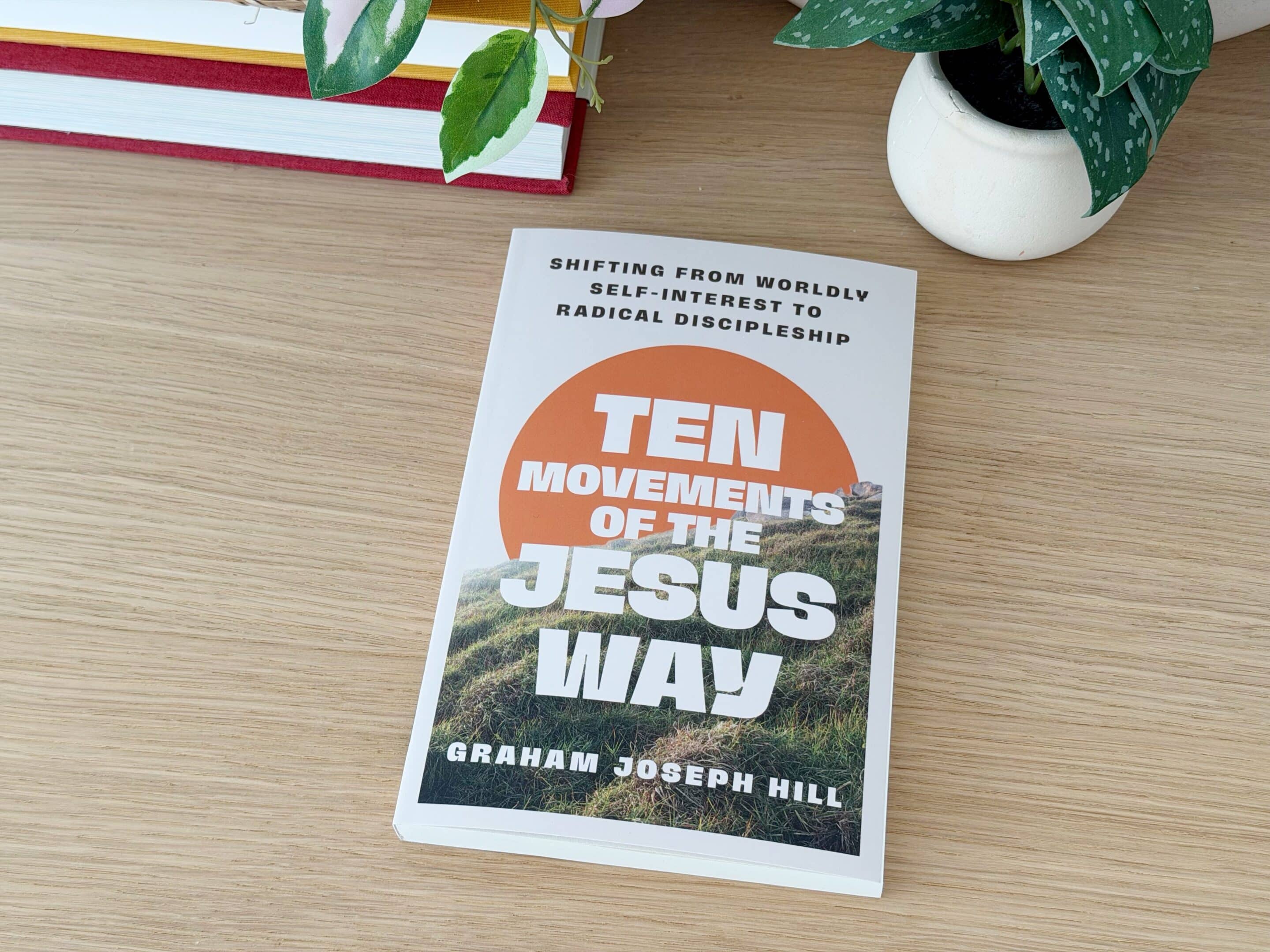
A new book for the journey: releasing July 28If something here has stirred you toward the way of Jesus, you might find a companion in my new book, Ten Movements of the Jesus Way: Shifting from Worldly Self-Interest to Radical Discipleship, releasing with IVP on July 28, 2026. We’re living in a fractured moment, pulled apart by political polarization, performative religion, consumerism, nationalism, and widening inequality. The book offers an alternative: the slow, countercultural, life-giving path of Jesus. Across ten movements, from material success to spiritual riches, from power to servanthood, from exclusion to embrace, it traces a discipleship shaped by humility, justice, generosity, and love. Rooted in Scripture and drawing on the wisdom of African, Asian, Indigenous, and Latin American Christian traditions, it’s a prophetic invitation back to the radical road Jesus walked, and a hopeful vision for a church longing to reflect Christ again. Every chapter closes with questions for reflection, making it a companion for personal devotion, book clubs, and small groups. Preorder your copy now at IVP, Amazon, Barnes & Noble, or Bookshop.org. Also available as an audiobook.
|
____________________________________________________________
Keep walking the Jesus Way: the podcastIf you’d like to go deeper, join me on The Graham Joseph Hill Podcast, where I explore the questions that matter most for Christians today through conversations about faith, justice, spirituality, theology, culture, and the global church. New episodes drop weekly. Listen and subscribe at – https://ghill8.podbean.com
|

Photo by Nitish Meena on Unsplash