Something has gone hard in the air we breathe.
Scroll for five minutes and you’ll feel it. The pleasure people take in a stranger’s humiliation. The comment section sharpening its knives. The public figures who built whole followings on contempt, and the millions who tuned in for the cruelty and called it honesty. We’ve turned mockery into entertainment and outrage into a personality. Disagreement curdles into disgust inside a single exchange. And somewhere along the way, a lot of us came to believe that gentleness is for the naive, that the world rewards the sharp elbow and the cutting word, and that to be soft is to be prey.
Into a moment like this, the Christian faith says something the age can barely hear. It says that kindness sits close to the centre of everything. That the God who flung out the galaxies is kind, tender, patient beyond reason. That the coming of Jesus was kindness taking on a human face. And that the followers of Jesus are asked, right here, in this coarse and contemptuous hour, to become people through whom that kindness keeps arriving in the world.
We tend to file kindness among the smaller virtues, the manners we teach children, a pleasant manner laid over the serious business of life. That instinct has never been more mistaken, or more costly. Kindness runs closer to the centre of the Christian faith than we imagine, and a cruel age needs it the way dry ground needs rain. So let’s take it seriously, in three movements: what kindness is in God, how it grows in us, and how we practise it in a world that’s forgotten how.
The Kindness at the Centre of God
Start where all Christian thinking about kindness has to start, with God.
Hebrew Scripture carries a word that hums underneath the whole story: chesed. Translators reach for it with phrases like steadfast love, lovingkindness, mercy, and covenant faithfulness, because no single English word holds it all. Chesed is the loyal, tender, unearned goodness that God keeps showing a people who keep wandering off. Psalm 136 sets the word to a drumbeat, twenty-six times over: God’s chesed endures forever. The universe, the exodus, the daily bread, the long patience with a stubborn nation, all of it flows from a goodness that will not quit.
When the story crosses into Greek, the word for kindness is chrestotes. It stands in the fruit of the Spirit in Galatians. It’s what Paul tells the Colossians to wear each morning. And it carries a working double meaning: goodness that’s useful, goodness that does something, kindness with its sleeves rolled up. A close cousin of the word, chrestos, means good or kind or easy to bear. Jesus reaches for it in one of the gentlest invitations in all of Scripture: take my yoke upon you, for my yoke is chrestos, kind, easy, well-fitted to your shoulders.
Here’s a detail the early church loved. The word for Christ, Christos, sounded almost identical to that word chrestos, the word for kind. Outsiders sometimes misheard it and called the followers of Jesus the Chrestians, the good ones, the kind ones. They heard kindness in the very name, and they weren’t wrong to. To sum up the whole arrival of Jesus, the incarnation, the cross, the mercy poured over the world, Paul reached for exactly this word. When the kindness of God our Saviour appeared, along with God’s deep love for humanity, we were saved. The coming of Christ was the kindness of God taking on a face, a voice, and a pair of working hands.
And this kindness is the very thing that draws us home. Paul tells the Romans, in a line worth memorising, that the kindness of God is what leads us to repentance. Not the thunder. Not the fear. Not the threat. It’s the sheer, disarming goodness of God that breaks a hard heart open and turns it around. Which means kindness in a Christian is the overflow of a kindness that was there first, older than the world, running through the character of God like grain through wood. We’re kind because we’ve been dealt with kindly by the Holy One who made us and came for us.
The Kindness That Won an Empire
Here’s something worth remembering in a hard age. The first Christians grew up inside an empire that could be casually brutal, a world of slavery and exposure and the arena. And the thing the watching world kept noticing about them was their kindness.
When plagues swept the cities and everyone who could afford to flee fled, the Christians stayed and nursed the sick, their own people and their pagan neighbours alike. They took in the infants that others left out to die. They treated slaves and women and foreigners as people of real worth. A historian who spent years studying how this small movement grew concluded that this was the engine of it. Political power came late in the story. What spread the faith was the slow, attractive pull of a community that loved better than the world around it. People looked at that tenderness and wanted in. Kindness was the argument. In an age like ours, it still is.
How Kindness Grows in Us
Kindness of this depth is a gift before it becomes a duty. It grows in us the way fruit grows on a tree, slowly, from the inside, out of a life rooted in something.
Receiving is the root. Before kindness becomes something we do, it’s something done to us. You can only give away what you’ve been given, and the person who has tasted the kindness of God has something to pour out. The people I’ve known whose kindness ran deepest were nearly always people who knew, in their bones, that they were loved. Their gentleness with others came from a settledness in themselves, a sense of being held that freed them to attend to someone else. Kindness has a source, and the source is grace received.
There’s an inner spaciousness that kindness needs, and the contemplatives have always understood this. When we’re anxious, hurried, and full of our own noise, kindness gets crowded out. We rush past the person in front of us because we’re already three steps ahead in our minds. The practices that still the inner racket, prayer, silence, the slow reading of Scripture, sabbath, do a hidden work here. They clear a space inside us. They loosen the grip of our own urgency long enough to notice another human being and respond with care. Contemplation and compassion have always travelled together. People who pray deeply tend, over time, to grow kinder, because prayer keeps enlarging the heart until there’s room in it for others.
And kindness reaches all the way to the self. Many sincere Christians are gentle with everyone except the person in the mirror, carrying a harshness toward their own failures they’d never dream of turning on a friend. The kindness of God reaches down into that hidden cruelty and offers a gentler word. To receive God’s gentleness toward your own broken places, to speak to yourself the way Love speaks to you, is part of how kindness grows. A person at war with themselves has little peace to give away. A person who has made peace with being loved becomes a wellspring.
The Practice of Kindness
Kindness is made to move. It takes shape in hands and words and choices, out where people can feel it.
Jesus told a story about this that has never lost its edge. A traveller is beaten and left half-dead by the road. Two religious professionals pass by on the far side, busy, careful, unwilling to be delayed. Then a Samaritan, a member of a despised group, stops, kneels in the dust, cleans and binds the wounds, lifts the wounded traveller onto the animal, pays for the care, and promises to return. Jesus tells the story to answer a question about who counts as a neighbour, and the answer turns out to be practical to the point of bandages and coins. Kindness, in the Gospels, has a body. It gets down in the dirt. It costs time and money and comfort.
Attention comes first, and it’s the hardest of the practices. Most unkindness is a failure to notice. We’re preoccupied, hurried past the cashier, the colleague, the family member who needed a moment of our real presence. So kindness begins with the discipline of looking up. Seeing the person in front of you. Slowing down enough to register that they’re tired, or anxious, or lonely, and letting that recognition move you toward a small act of care.
Then comes kindness in speech, which we underrate constantly, and never more than now. In an age that treats the cutting remark as a sport, a kind word is close to countercultural. It costs nothing and can change the shape of someone’s day. Encouragement offered out loud. Gratitude spoken instead of assumed. The choice, in a hundred small conversations, to build a person up. Our words carry more weight than we know, and a steady practice of kind speech is one of the most available forms of love we have.
The sharpest practice of all is kindness toward the people who’ve earned our coldness. Jesus set the bar exactly where we’d least like it: be kind to the ungrateful and the wicked, because that’s what God is like. Kindness toward the person who irritates you, the one who wronged you, the one on the far side of every line your culture draws, is the practice that marks the Jesus way as something beyond ordinary decency. Anyone can be kind to the kind. Kindness like this takes more strength than cruelty will ever need. The followers of the Chrestos are asked to be kind the way God is, generously, toward people who’ve done nothing to deserve it.
A Practice for the Week
Let me offer something concrete, because kindness grows through practice, one small act at a time.
This week, try what you might call the ministry of the extra minute. Once a day, with one person, give a minute you didn’t have to give. Stay in the conversation thirty seconds longer than usual. Ask the follow-up question, and actually wait for the answer. Notice the person doing invisible work around you, the one who cleans, serves, drives, or cares, and say a real word of thanks. Write the message you keep meaning to send. Let one interaction each day be slower, warmer, and more attentive than efficiency would allow.
Pair it with a hidden practice, one nobody sees. Each morning, before the day picks up speed, receive the kindness of God toward you. Sit for two minutes and let yourself be looked at with love. Speak gently to your own tired heart. You’ll find that the kindness you take in at the start of the day has a way of spilling out of you before the day is done. We give what we’ve received.
This work will never trend, and no one hands out medals for it. And still, a life given over to kindness, day after unremarkable day, does a work in the world that the loud and the cruel keep missing. It softens the hard places. It carries the love of God into rooms no argument will ever reach. In an age that has made contempt a habit, a single kind person becomes an act of resistance, living proof that the hard story about the world is a lie.
The kindness of God appeared, once, in a person. In a cruel age, it’s still meant to.
Here’s a question to carry with you: whose face will you turn toward this week, with the unhurried, undeserved kindness that God has already turned toward you?
Photo by Adam Nemeroff on Unsplash
____________________________________________________________
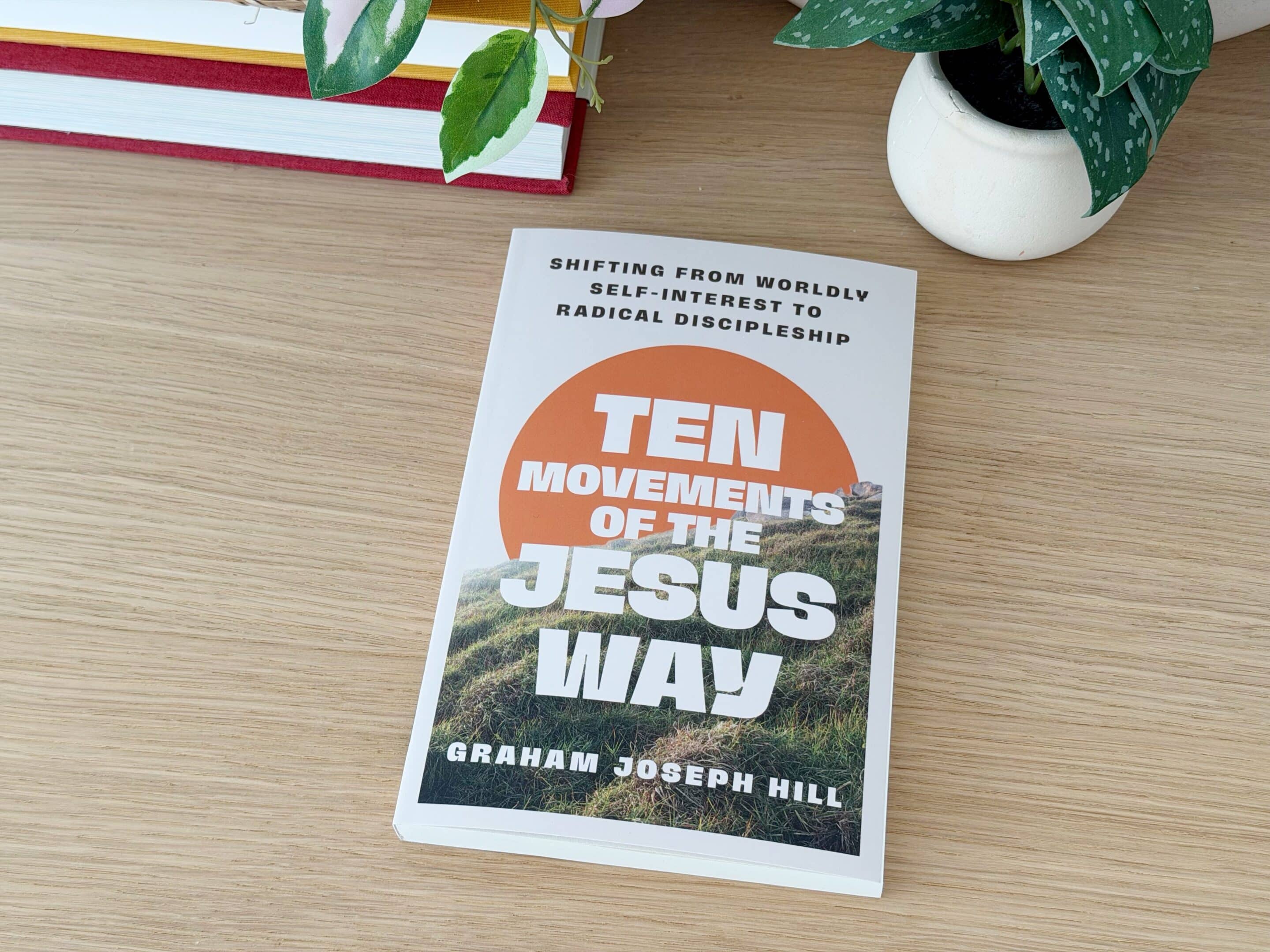
A new book for the journey: releasing July 28If something here has stirred you toward the way of Jesus, you might find a companion in my new book, Ten Movements of the Jesus Way: Shifting from Worldly Self-Interest to Radical Discipleship, releasing with IVP on July 28, 2026. We’re living in a fractured moment, pulled apart by political polarization, performative religion, consumerism, nationalism, and widening inequality. The book offers an alternative: the slow, countercultural, life-giving path of Jesus. Across ten movements, from material success to spiritual riches, from power to servanthood, from exclusion to embrace, it traces a discipleship shaped by humility, justice, generosity, and love. Rooted in Scripture and drawing on the wisdom of African, Asian, Indigenous, and Latin American Christian traditions, it’s a prophetic invitation back to the radical road Jesus walked, and a hopeful vision for a church longing to reflect Christ again. Every chapter closes with questions for reflection, making it a companion for personal devotion, book clubs, and small groups. Preorder your copy now at IVP, Amazon, Barnes & Noble, or Bookshop.org. Also available as an audiobook.
|
____________________________________________________________
Keep walking the Jesus Way: the podcastIf you’d like to go deeper, join me on The Graham Joseph Hill Podcast, where I explore the questions that matter most for Christians today through conversations about faith, justice, spirituality, theology, culture, and the global church. New episodes drop weekly. Listen and subscribe at – https://ghill8.podbean.com
|