There’s a tiredness that sleep doesn’t reach.
You wake, and before your eyes are fully open the weight is already there, resting on your chest like something with actual mass. The day hasn’t begun and you’re behind it. You get up anyway. You make the coffee, answer the message, smile at the person in the corridor, and every ordinary act costs more than anyone watching could guess.
A friend told me once, over the phone, that the hardest thing they did each morning was put their feet on the floor. For two years they’d sung in church on a Sunday, shaken hands at the door, asked after my week and meant it, and carried underneath all of it a heaviness they had no words for and no permission to name. I’d seen none of it. That’s the strange mercy and cruelty of this particular weight: it’s so often carried by the people who look most put together.
Words old enough to hold it
Scripture has language for this, older and rawer than most of our churches let on. Open Psalm 42. “Why are you cast down, O my soul?” The word for soul there is nephesh, and nephesh means the whole living self, the throat, the breath, the appetite, the life in you. So this is the whole self speaking, the entire life bent to the ground. The verb, shachach, means folded low, pressed down, bowed under. Whoever first prayed these words knew what it was to be flattened.
A few lines on comes one of the most honest confessions in all of Scripture. “Deep calls to deep at the roar of your waterfalls; all your breakers and your waves have gone over me.” The word is tehom, the primal ocean, the dark waters from the first breath of Genesis before there was light. To pray this is to say: I’m going under, into the chaos that was here before the world began. And the Holy One did not strike that line from the songbook. Love left it in, handed it to us, and said, when you feel this, here are the words.
If you’d like to sit with this further, I go deeper into it on The Graham Joseph Hill Podcast, available wherever you get your podcasts.
Elijah, Gethsemane, and the God who tends a body
Consider Elijah, fresh from the greatest victory of a long prophetic life, fire falling from heaven, a whole nation turning back in a single afternoon. Then, with no warning, the collapse. Elijah runs into the wilderness, sinks down under a solitary broom tree, and asks to die. “I’ve had enough.” Watch what happens next, because it reorders much of what we were taught about faith and feeling. No rebuke comes. No lecture about gratitude arrives. An angel simply lets the exhausted prophet sleep, then wakes Elijah for bread and water, and lets the prophet sleep again. Only after the body has been fed and rested twice does any word come. When it comes, it arrives as a sound of thin silence, a whisper you’d miss if you were straining to hear thunder.
Heaven’s first move is to tend a body. Sleep, food, rest. Long before anyone asks Elijah to believe harder or feel differently, the Holy One meets the prophet as a creature of flesh, because flesh is what we are. We’re embodied lives, breath and chemistry and weariness woven together, and the One who made us knows this better than we do. So when a person carrying depression is told to pray it away, something has gone wrong in our theology. Sometimes the most faithful step available is to sleep, to eat, to see a doctor, to receive the good gift of medicine with open hands.
Then there’s the garden. On the last night, in Gethsemane, Jesus knelt under the olive trees and began to shake. The Gospel reaches for a word that resists easy translation: perilypos, sorrow that surrounds a person on every side, grief rising like water past the shoulders. “My soul is overwhelmed to the point of death,” Jesus said, reaching for that same word, nephesh, the whole self pressed to its breaking. Christ knew the weight from the inside, as sweat and trembling and a cry flung into the dark. Whatever depth you’re in, it’s a depth where Christ has already knelt.
My friend on the phone told me something later that I keep returning to. The weight didn’t lift the day they finally said it aloud. What shifted was that it stopped being theirs to carry alone. Another set of hands had come underneath it, and that, they told me, was the first morning the whole thing felt survivable. Love tends to work this way in the depths, by climbing down and staying, until the staying itself becomes the start of healing.
What our moment has done with the weight
Look at what our moment has done with all of this. We’ve taken suffering that people once carried inside a family, a village, a congregation, a shared story that told them what their pain meant and who would sit with them in it, and we’ve handed it back to each person as a private problem to solve alone. The medicine is good. Thank God for the medicine. The isolation around it is doing its own slow harm. And the church, which should be the one room where a person can walk in flattened and be held, has too often asked for the smile at the door with nothing allowed underneath it. We inherited a stoicism that prizes the composed face and calls it strength. Harden up. Push through. Don’t make a fuss. That silence carries a cost, and in this country we know its name, because we’ve grieved too many people who were never given permission to say they were going under.
Long ago, contemplatives had a name for the heaviness that settles at midday and drains the colour from prayer. They studied it, walked through it, wrote of it with tenderness. They knew the dark could visit the most devoted heart, and they named its arrival as part of the life of faith. A cast-down soul was, to them, a place to meet Love, not the proof of a soul’s collapse.
There’s a version of belief circulating now that treats joy as a performance and sorrow as a failure of nerve. It hands a struggling person a verse like a plaster laid over a wound that needs a surgeon, and it has bruised a great many faithful hearts. The Scriptures are wiser than that. Close to a third of the Psalms are songs of lament, complaint set to music, grief spoken plainly into the ears of Love. A faith with room for lament can hold you on your heaviest morning and not flinch.
Picture a church brave enough to make room for this. Once a month, a song in a minor key. A prayer said out loud: “How long, O Love?” A silence held long enough that the person three rows back can breathe out and stop performing. Honesty like that in worship tells the flattened ones they belong here, cast-down soul and all, and that they can bring their whole selves through the door and leave nothing in the car park.
Something to try this week
Try something this week, and it’s simpler than you might expect. Pray one lament psalm a day. Begin with Psalm 13, which opens with “How long?” and travels, without pretending, toward trust. Then Psalm 42. Then Psalm 88, the darkest of them all, which ends in shadow and was kept in the book exactly as it stands. You don’t need to manufacture a feeling. Say the words. Let the old prayers carry your weight on the days you have no prayer of your own. Hold the praying and the practical together, too. Ring your doctor. Tell one trustworthy person the truth. Walk out into the morning light, sleep when your body begs for it, eat something good. All of that is faith in action, the shape belief takes in a body worn thin. And if the depths aren’t yours right now, find someone for whom they might be, and ask the question twice. “How are you, really?” The second asking is where the truth tends to surface.
Here’s my question for you, and I’d love your answer in the comments. When the weight has pressed hardest, what has actually helped you carry it: a person, a practice, a psalm, a doctor, a presence you couldn’t quite name?
If this stirred something in you, there’s a longer and more searching conversation about all of it in the latest episode of The Graham Joseph Hill Podcast. Listen wherever you get your podcasts, then come back and tell me what you’re carrying, and what’s been carrying you.
____________________________________________________________
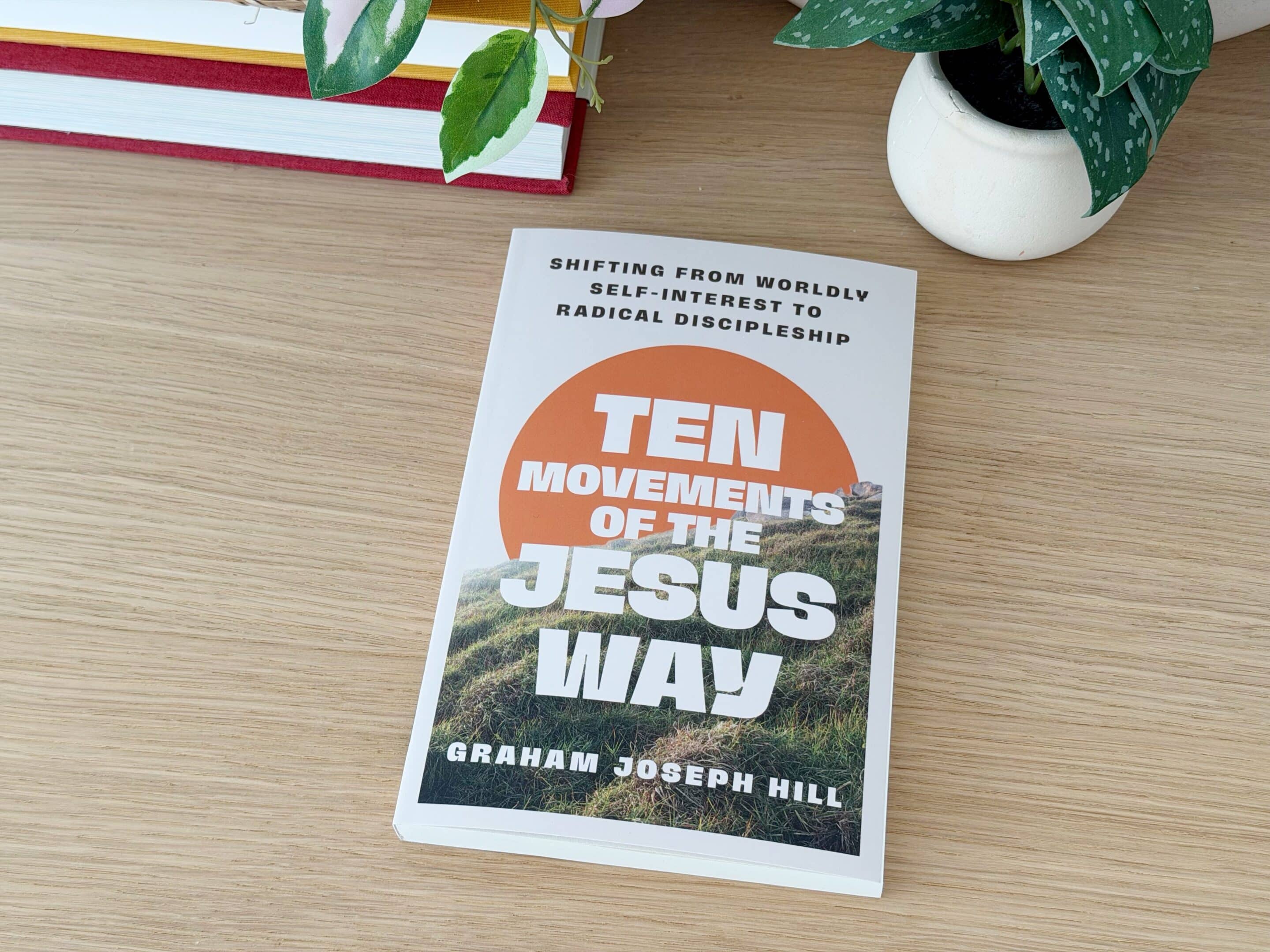
A new book for the journey: releasing July 28If something here has stirred you toward the way of Jesus, you might find a companion in my new book, Ten Movements of the Jesus Way: Shifting from Worldly Self-Interest to Radical Discipleship, releasing with IVP on July 28, 2026. We’re living in a fractured moment, pulled apart by political polarization, performative religion, consumerism, nationalism, and widening inequality. The book offers an alternative: the slow, countercultural, life-giving path of Jesus. Across ten movements, from material success to spiritual riches, from power to servanthood, from exclusion to embrace, it traces a discipleship shaped by humility, justice, generosity, and love. Rooted in Scripture and drawing on the wisdom of African, Asian, Indigenous, and Latin American Christian traditions, it’s a prophetic invitation back to the radical road Jesus walked, and a hopeful vision for a church longing to reflect Christ again. Every chapter closes with questions for reflection, making it a companion for personal devotion, book clubs, and small groups. Preorder your copy now at IVP, Amazon, Barnes & Noble, or Bookshop.org. Also available as an audiobook.
|
____________________________________________________________
Keep walking the Jesus Way: the podcastIf you’d like to go deeper, join me on The Graham Joseph Hill Podcast, where I explore the questions that matter most for Christians today through conversations about faith, justice, spirituality, theology, culture, and the global church. New episodes drop weekly. Listen and subscribe at – https://ghill8.podbean.com
|

Photo by Alex Machado on Unsplash