A Missional Reckoning: What Missional Theology Promised, What It Delivered, and What Comes Next
It’s been almost three decades since Darrell Guder’s Missional Church appeared in 1998, and longer than that since Lesslie Newbigin’s late writings began reshaping how English-speaking Christians talked about the church’s purpose. The vocabulary worked. By 2010, “missional” had become the adjective of choice across denominational documents, seminary curricula, church planting networks, conference circuits, and pastors’ bookshelves. Mainline and evangelical writers used it. Reformed and Anabaptist writers used it. Catholic renewal voices borrowed it. The word saturated the conversation.
The fruit didn’t follow.
Western Christianity has continued to decline through the period in which missional theology was most influential. Conversions are flat or falling in most of the denominations that adopted the language earliest. New church starts are down. The number of Western Christians sent as long-term cross-cultural missionaries has dropped. The congregations that have actually grown through conversion in the West over the past twenty years are mostly not the congregations that adopted missional vocabulary most enthusiastically. They’re often the ones whose theology missional writers spent two decades telling everyone was inadequate.
That’s a strange outcome. A theological movement explicitly oriented toward renewing the church’s mission has presided over a period in which the church’s mission, by most measurable indicators, kept losing ground.
The argument I want to make in this piece is that this isn’t a coincidence, and it isn’t simply the result of headwinds the framework couldn’t have anticipated. The assumptions of missional theology contained internal weaknesses that thoughtful critics named, sometimes from the start. Those weaknesses predicted the kinds of failures we’ve actually seen. An honest reckoning with what happened points toward what the missional project needs to become if it’s going to bear the fruit it promised.
I’m writing this as a sympathetic critic. The missional vision wasn’t a bad project, and parts of it were exactly right. But sympathy isn’t served by pretending the past two decades haven’t happened. Pastors and theologians who’ve used this vocabulary for years and are wondering why the results haven’t matched the rhetoric deserve a clear account of what went wrong and what could come next.
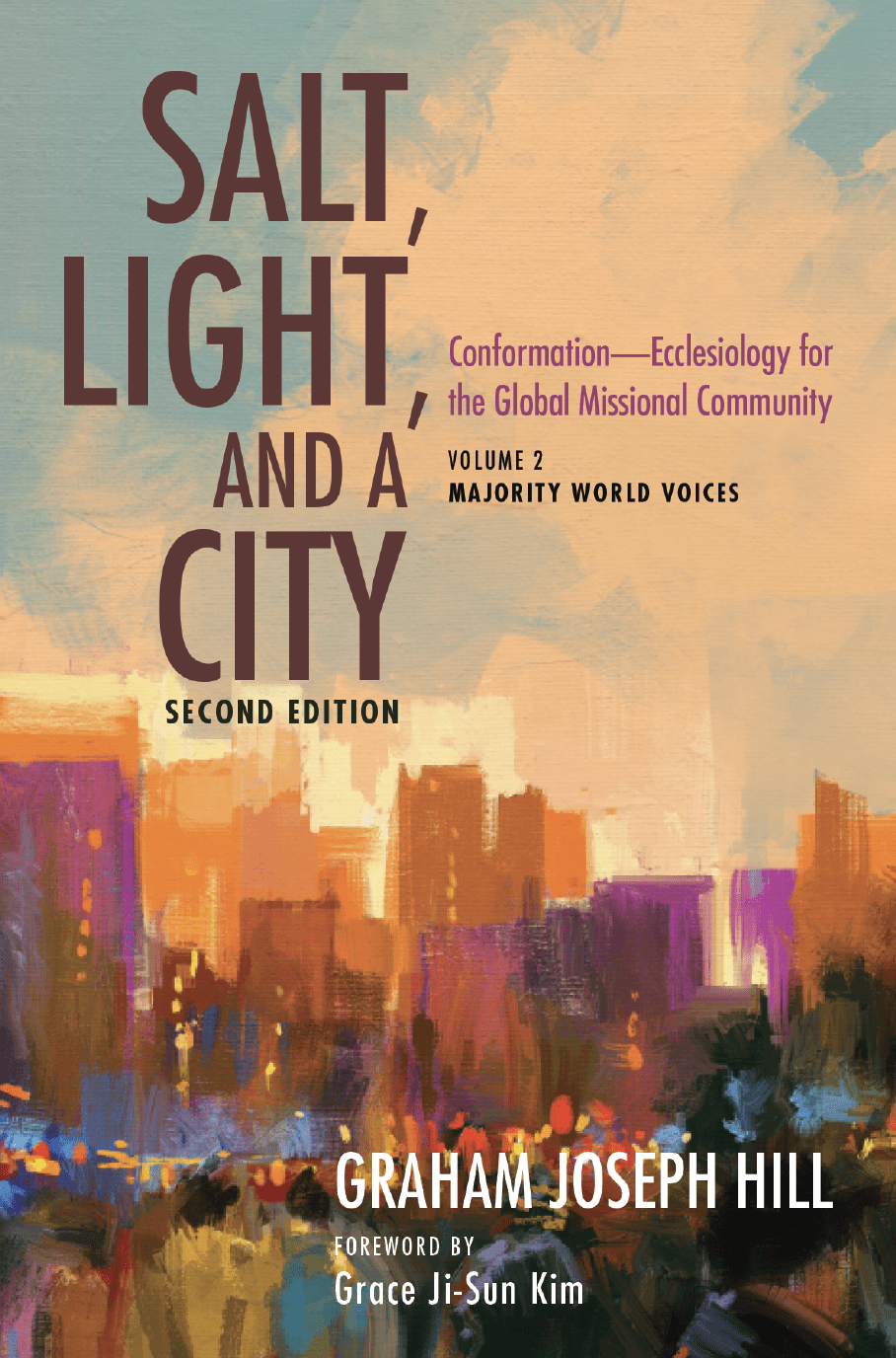
I’m not writing this from the outside. I contributed to the missional conversation myself, including through my book Salt, Light, and a City, and I was involved in the missional movement through the early 2000s as it gathered momentum across denominations and networks. I read the books as they came out, taught the categories, helped shape the language in the contexts I worked in, and believed the project had something to offer a Western church that needed to recover its missionary nerve. So I write as an insider who once worked inside the missional vocabulary and shaped some of its outputs. After three decades, the fruit is in, and the honest thing is to take stock. Loyalty to a project I helped build isn’t the same as loyalty to its claims, and the claims are what matter now.
This piece works through six steps. First, what missional theology actually claimed at its best. Second, the counterfactuals that thoughtful critics raised against those claims. Third, what we actually saw happen across two decades of missional emphasis in the West. Fourth, an honest assessment of whether the counterfactuals were validated by the outcomes. Fifth, what this teaches us about theological method and ecclesiology. Sixth, how the missional project needs to change if it’s going to bear the fruit it promised. The conclusion holds the loss and the possibility together, because both are real.
What Missional Theology Actually Claimed
The intellectual lineage matters because it shapes what the movement was trying to do. Newbigin returned to Britain after decades in India and asked whether the West could be converted. The question landed because Newbigin saw what most Western theologians at the time didn’t: that the cultural Christianity surrounding them was a mission field, not a Christian society. David Bosch’s Transforming Mission in 1991 gave the conversation a magisterial historical and theological frame. The Gospel and Our Culture Network gathered the North American voices. Guder’s edited Missional Church in 1998 became the field’s defining document. Christopher Wright’s The Mission of God in 2006 grounded the project biblically. Evangelical voices like Michael Frost, Alan Hirsch, and Ed Stetzer pressed the apostolic and incarnational dimensions harder than the mainline ecumenical voices had.
Behind all of this stood the missio Dei tradition coming out of the Willingen International Missionary Council conference in 1952, which insisted that mission belongs first to God, not to the church.
The core assumptions can be grouped into three clusters.
The theological foundations include the missio Dei conviction that mission begins in God’s own life and extends through the church into creation, the trinitarian grounding that derives the church’s sent identity from the Father’s sending of the Son and the Father and Son’s sending of the Spirit, the kingdom of God as the wider category that gives the church its purpose, and an eschatological orientation that situates the church between resurrection and return as a sign and foretaste of the new creation.
The ecclesiological claims include the church as participant in God’s mission, not its originator; the whole people of God as agents of mission, not the specialists alone; and the local congregation as the primary unit of mission, not denominational programs.
The cultural posture includes the post-Christendom diagnosis that the West is now a mission field, incarnational engagement following Jesus’ pattern of entering specific contexts, missionary encounter with culture that discerns where the host culture aligns with and resists the gospel, and integrated witness that holds evangelism, justice, discipleship, and creation care together.
It’s worth saying clearly why this was compelling. The framework offered a way out of the consumer-vendor church model that had hollowed out so much of late-twentieth-century evangelicalism. It recovered the laity’s vocation in the world after generations of clericalism. It took the post-Christian cultural moment seriously when most of the Western church was either pretending the moment hadn’t arrived or panicking about it. It connected the local congregation to a wider biblical and theological story. The framework wasn’t a bad project. That’s part of what makes the diagnosis worth doing carefully.
What the Movement Got Right
Before the diagnosis, the affirmation. The missional movement got real things right, and any honest reckoning has to start there.
It named the consumer-vendor church for what it was. By the late 1990s much of Western Protestantism had organized itself around meeting religious consumer demand: programs as products, congregations as audiences, pastors as providers. Other frameworks saw this and either accommodated it or complained about it without much theological depth. Missional theology gave the church language to name the pathology and a theological vision big enough to imagine something else. That was a real gift, and the gift hasn’t expired.
It recovered the laity’s vocation in the world. Generations of clericalism had made mission the work of specialists: ordained pastors, professional missionaries, denominational executives. Lay people went to church and supported the work. Missional theology insisted, rightly, that the whole people of God share in the church’s calling, that ordinary Christians in ordinary jobs and neighborhoods are part of what God is doing in the world. The framework’s later failures around democratization without formation don’t undo this recovery. The instinct was correct.
It took the post-Christian moment seriously when much of the Western church was still pretending the moment hadn’t arrived. Newbigin’s question about whether the West could be converted was the right question, even if the diagnosis attached to it has aged unevenly. Mainline and evangelical churches alike were still operating with assumptions about cultural Christianity that had stopped being true. Missional theology forced the conversation that needed to happen.
It recovered place and locality. Against a programmatic ecclesiology that could have functioned anywhere, the framework reconnected congregations to actual neighborhoods, particular streets, specific people. The theology of place that came out of missional thought, at its best, has produced congregations that know where they are and act like it. That’s a permanent gain.
It took scripture and the Trinity seriously. Christopher Wright’s The Mission of God is genuinely a major work of biblical theology, regardless of what one thinks of the wider movement’s drift. The project at its best wanted mission grounded in God’s character and biblical narrative, not in pragmatic technique or growth strategy. That seriousness deserves recognition.
These contributions are real, and a sober assessment of where the framework went wrong has to hold them in view. The critique that follows isn’t that the missional movement was a mistake. It’s that a movement with real gifts also had real weaknesses, and the weaknesses ended up shaping the outcomes more than the gifts did. That’s the story worth telling.
The Counterfactuals
Every theological framework has stress points. For missional theology, here’s where the load-bearing was thinnest, and these were largely visible by the mid-2000s.
The trinitarian overreach. Stephen Holmes and others working in classical trinitarian theology have argued that the missio Dei tradition reads a modern activist conception of mission back into the immanent Trinity. The Cappadocians and Augustine didn’t derive ecclesial mission from trinitarian processions in the way Moltmann and Bosch do. There’s also the trajectory inside the missio Dei tradition itself: Hoekendijk’s drift toward a content-less divine activity in history that made the church optional. The framework had instability at its source. The concern wasn’t that mission shouldn’t be grounded in God. It’s that grounding it in a particular reading of the Trinity, one developed under specific 20th-century pressures, made the framework vulnerable to the drifts those pressures were already moving it toward.
The conceptual inflation problem. When mission means worship, fellowship, discipleship, justice, evangelism, hospitality, creation care, and presence in the neighborhood all at once, the term loses analytic purchase. It can no longer distinguish anything. John Flett, himself sympathetic to the project, worried in The Witness of God about how capacious the term had become.
The word-deed asymmetry. Romans 10:14-17 and 1 Corinthians 15:1-4 give verbal proclamation a structural priority that the integrated “word and deed” formula doesn’t quite capture. Both matter, but they don’t bear equal weight in the New Testament. The historical pattern of mainline Protestantism, where social witness eventually crowded out evangelism, was the empirical worry sitting in plain sight.
The incarnational analogy strain. John Webster argued that “incarnational ministry” instrumentalizes Christology by treating a unique unrepeatable event of the eternal Son assuming human nature as a model for congregational practice. The biblical category for the church’s pattern is more often cruciform, apostolic, or pilgrim. Hauerwas pressed the related concern that incarnational contextualization without strong critical resources tends to absorb the host culture’s pathologies.
The post-Christendom diagnosis. Charles Taylor’s A Secular Age offered a more complex account of secularization than missional writers typically used. Rodney Stark and the later Peter Berger pressed back against simple secularization theory. Global Christianity is growing. American religious practice is more resilient than European patterns suggest. “Christendom” itself is a contested historical category often deployed polemically rather than descriptively. Oliver O’Donovan’s The Desire of the Nations defended aspects of the Christendom settlement that missional writers dismissed.
The kingdom-without-church drift. The sharp distinction between kingdom and church that missional writers often drew is exegetically thinner than it looks. The New Testament holds them more closely than the framework allows. Catholic and confessional critics have pressed this point repeatedly.
The democratization without formation problem. Ephesians 4:11 reserves apostolic and evangelistic gifts for specific persons within the body. Christian Smith’s research documented widespread inarticulacy among American Christians who couldn’t state basic faith content. Telling everyone they’re a missionary, without the formation, accountability, or gifting that historic missionary sending involved, threatened to produce guilt rather than fruit.
The local-congregation-only ecclesiology. Ralph Winter’s modality and sodality distinction captured something missional ecclesiology often missed. The New Testament knows translocal apostolic bands, networks, and sending structures alongside local congregations. The 19th-century missionary movement’s productivity rested on dedicated sending societies. Absorbing mission entirely into the local congregation weakened the apostolic infrastructure.
The realized eschatology slide. If God is renewing all things and we’re participating in that renewal, the question of why someone needs to hear and respond to the gospel now becomes harder to answer with force. Missional rhetoric about participation in God’s restoration of creation is beautiful, but it doesn’t generate the kind of urgency that historically produced missionary movements. The decline of explicit teaching on judgment correlates with the decline in evangelistic activity.
These weren’t fringe objections. They came from sympathetic theologians, biblical scholars, and historians of mission. Most were on the table by 2005. Most got absorbed into footnotes rather than answered.
What Actually Happened
Theology gets tested by what it produces. Here’s what two decades of missional emphasis produced.
The vocabulary spread, the practice didn’t follow. Denominational documents, seminary curricula, church planting networks, conference circuits all adopted missional language. Pastors retitled programs as “missional engagement.” Job descriptions added “missional” as an adjective. Books, podcasts, and conferences proliferated. Meanwhile baptisms of non-Christians, conversions, and new church starts continued declining across most of the denominations that adopted the language most enthusiastically. The PCUSA, ELCA, Episcopal Church, and United Methodists all show this pattern. So do many evangelical denominations including the CRC and significant portions of the Southern Baptist Convention. The decline isn’t catastrophic everywhere, but the trajectory is unmistakable, and it’s the trajectory in precisely the bodies that adopted missional language earliest and most thoroughly. The vocabulary did the work. The reality didn’t follow.
Where mission actually grew. The growing-through-conversion congregations in the West over this period have generally operated with theologies missional writers told them were inadequate. Confessional Reformed networks like Acts 29 in its earlier form and many PCA congregations. Anglican plants under ACNA, plus the wider HTB and Alpha network. Pentecostal and charismatic networks like ARC and parts of the Vineyard. Catholic renewal movements including the FOCUS missionary network and various charismatic Catholic communities. Immigrant churches across multiple traditions. These bodies emphasized verbal proclamation, catechesis, classical eschatology, and confessional clarity. They contextualized, sometimes radically, but with critical resources the missional frame lacked. They didn’t typically describe themselves as missional, even when they were doing exactly what missional theology was supposed to be producing.
The neighborhood-presence-without-conversion pattern. The most common missional outcome in mainline and evangelical-progressive contexts has been a congregation that gets serious about its neighborhood, runs a community garden, hosts a refugee resettlement partnership, opens its building to local groups, partners with the school across the street, and produces almost no conversions. The activities are real goods. They aren’t nothing. They reflect Christians taking incarnational presence seriously. But they aren’t what the framework promised. The framework promised renewed mission producing new disciples in a post-Christian culture. What it often delivered was renewed neighborhood involvement producing a slightly more locally embedded version of a still-declining congregation.
Burnout and the unevangelized lay person. The “every Christian is a missionary” frame produced widespread guilt without widespread fruit. Lay people are told their workplace is their mission field but given no training in how to share faith. They watch their pastors model neighborhood presence but rarely model conversion conversations. They’re told evangelism happens through relationship, then never see anyone in their congregation actually invite a friend to repentance and faith. The result is what Smith documented: Christians who can’t articulate the gospel and don’t try.
Consider a composite trajectory that will look familiar to many pastors. A mainline congregation in a college town adopts missional language around 2005. The pastor reads Newbigin, Bosch, and Guder. The leadership team works through Missional Church together. They reorganize ministry teams around neighborhood engagement. They build relationships with the local school, host community meals, partner with the food pantry. The website gets rebranded with missional language. The pastor preaches incarnational themes for two years. Books appear on the staff reading list with titles invoking neighborhood, presence, and place. The congregation hosts a film series on faith and culture. They run a community garden on the church lawn and donate the produce to the food pantry. They rewrite their mission statement to include the language of God’s mission in the world. By 2015 the congregation has a strong reputation in town for being “the church that shows up.” It’s also down forty percent in worship attendance from 2005 numbers. The handful of newer attenders are mostly Christians transferring from other declining congregations. The congregation does almost no conversion baptisms in this whole period. The leaders feel exhausted and confused. They did what the books said.
Now consider a contrasting trajectory. A new Anglican plant in the same city, started around 2012, opens with weekly Eucharist, a clear confessional identity, an Alpha course running three times a year, and a pastor who preaches Christ crucified and risen with regularity and warmth. The plant takes contextualization seriously, including the demographics and questions of its specific neighborhood, but it doesn’t apologize for being Christian and it doesn’t try to soften its particularity. Members run an Alpha table at a coffee shop. The pastor trains lay people specifically in how to invite friends, how to walk someone through the gospel, how to pray with someone who’s curious. The congregation grows to 200 in five years, with about half of those converts from non-Christian backgrounds. They contextualize. They do justice and mercy. They engage their neighborhood. But the order of operations is different: proclamation first, then formation, then service, all of it confessional, all of it expectant.
Neither trajectory is universal, and there are clear exceptions in both directions. But the patterns are common enough that almost any pastor who’s been around the Western church for two decades will recognize them. The question is what to make of it.
Were the Counterfactuals Validated?
Now we can ask the diagnostic question. Did the weaknesses critics identified actually produce the results we see?
Conceptual inflation predicted dilution. We got dilution. When everything counts as mission, congregations defaulted to the easier parts of the integrated vision and quietly dropped evangelism. The other activities are easier to sustain, easier to measure, easier to celebrate, and don’t require risking rejection. So the framework’s holism, designed to enrich mission, in practice hollowed out the specifically evangelistic edge. The prediction matched the outcome.
Word-deed asymmetry predicted evangelistic collapse. We got evangelistic collapse. The framework treated word and deed as equal partners in integrated witness. In practice, deed expanded and word contracted. Pastors who would happily talk to their congregations about food justice or refugee resettlement wouldn’t talk to them about judgment or the necessity of personal faith in Christ. Congregations followed their pastors. Conversions declined.
Incarnational drift predicted cultural capture. We got cultural capture. Missional congregations in progressive urban neighborhoods often look indistinguishable from those neighborhoods in their politics, aesthetics, and ethical assumptions. Missional congregations in suburban consumer culture often look like that culture. The framework gave congregations permission to contextualize without giving them tools to resist what they were contextualizing into. Hauerwas’s critique anticipated this exactly.
Democratization without formation predicted inarticulacy. We got inarticulacy. Smith’s data on Moralistic Therapeutic Deism was the canary, and the situation has gotten worse since. The lived experience of pastors who can’t get their lay people to invite friends to anything spiritual, even in congregations that have spent years on missional formation, confirms the pattern. Telling people they’re missionaries didn’t make them missionaries. Forming them as missionaries might have.
Post-Christendom misdiagnosis predicted misfired strategies. We got misfired strategies. The “post-Christian seeker” the framework imagined was less common than the literature suggested. The actual seekers in the past two decades, particularly among younger adults, were finding more confessionally specific churches: orthodox liturgical traditions, charismatic communities with high supernatural expectation, confessional Reformed congregations, traditional Catholic parishes. The diagnosis missed the actual cultural moment, which included a renewed hunger for transcendence and a fragmentation that made confessional specificity attractive rather than off-putting.
Local-only ecclesiology predicted structural weakness. We got structural weakness. Western missionary sending continued declining through the missional era. Church planting at scale required networks and sodalities that missional ecclesiology had largely absorbed into the local congregation. The networks that did plant churches successfully (Acts 29, City to City, Anglican networks under GAFCON, various charismatic streams) operated with stronger sodality structures than missional ecclesiology theorized. The framework’s theological permission lagged behind what the actual missionary work required.
Realized eschatology drift predicted loss of urgency. We got loss of urgency. Without judgment, without a clear answer to “why now?”, the framework couldn’t generate the energy that historically produced missionary movements. The Moravians, the early Methodists, the 19th-century missionary societies, the early Pentecostals, the post-war evangelical missions movement all operated with strong futures and clear stakes. Missional theology’s eschatology, beautiful in its account of new creation, didn’t replace what it softened.
Trinitarian overreach predicted theological drift. We got theological drift. The missio Dei concept’s instability, particularly its tendency toward content-less divine activity in history, allowed it to absorb whatever progressive vision the surrounding culture endorsed. In mainline contexts especially, “what God is doing in the world” became indistinguishable from current progressive social commitments. The framework couldn’t generate its own boundaries, which is what Hoekendijk’s critics warned about decades earlier.
Eight for eight is unusual in theological assessment. The counterfactuals weren’t speculative worries. They were structural diagnostics that turned out to be accurate. Some of the failure is sociological. Aging demographics, the collapse of denominational loyalty, the rise of the religiously unaffiliated, smartphone-mediated atomization, and the specific scandals that damaged Christian credibility in the West would have hurt any ecclesiology. Missional churches faced headwinds that traditional churches faced too. But the missional-specific failures track the missional-specific weaknesses with uncomfortable precision. The framework’s internal problems predicted the framework’s external results.
It’s worth a brief note about Newbigin himself, because the movement that took his name often softened his actual positions. Newbigin had a strong doctrine of conversion. He preached for response. He took proclamation seriously and never reduced it to a function of presence. He held a high view of the church’s distinctive identity over against the surrounding culture, and his pastoral practice in India and Britain reflected that. He understood judgment and the stakes of the gospel, and he wrote about both with sobriety. His engagement with culture was sharper and more critical than the soft contextualism that came to dominate parts of the missional movement. He could write about pluralism with a force that would make many of his contemporary admirers uncomfortable. The movement that made him a patron saint frequently dropped the parts of his theology that gave the rest its weight. That’s a pattern worth naming, because the critique of missional theology isn’t a critique of Newbigin. It’s a critique of what got built in his name, often with the harder edges sanded off.
A note on global perspective also belongs here. While the Western missional conversation circled itself, the Global South was doing mission. African, Asian, and Latin American Christians have things to teach Western missional theology, particularly about confessional clarity combined with cultural engagement, and about the kind of supernatural expectation that Western missional theology often quietly discarded. The growing Christianity of the past three decades has been overwhelmingly Global South. Africa now has more Christians than any other continent. Pentecostal Christianity has grown from roughly nothing in 1900 to perhaps half a billion adherents today, the bulk of them in the Global South. Chinese house churches and the underground Iranian church have grown through periods of intense persecution. None of this is operating with Western missional theology as a primary frame. Most of it operates with what Western missional theology was uneasy about: clear proclamation, expectant prayer, supernatural healing, urgent eschatology, unembarrassed confession. That’s an empirical fact the framework needs to reckon with. The center of Christian gravity has moved south and east, and the theology powering its growth doesn’t match the diagnosis or prescription that Western missional theology developed.
What This Teaches Us
Six lessons emerge from this examination.
Vocabulary isn’t formation. Adopting missional language did almost nothing on its own. Words have to be cashed out in practices, structures, and habits. The history of the movement is a warning about how fast theological vocabulary can become a substitute for the realities the vocabulary describes. A congregation can be deeply missional in language and indistinguishable from a maintenance congregation in actual practice. The substitution of language for substance is one of the characteristic failure modes of theological movements, and missional theology fell into it as completely as any movement in recent memory.
Categories that explain everything explain nothing. A doctrine of mission has to be specific enough to exclude things. If “everything is mission,” the concept does no analytic work. It tells a congregation nothing about what to do or what not to do. It offers a pastor no way to distinguish faithful mission from drift. It generates no accountability because it measures nothing. Future missiology needs sharper edges. Mission is a specific kind of activity oriented toward a specific kind of outcome, and recovering that specificity is a precondition for serious missional renewal.
Word and deed aren’t symmetrical, and pretending they are damages both. The integrated vision has scriptural warrant. Christians should care about their neighbors’ bodies, not just their souls. Justice and mercy belong to mission. But the asymmetry has more scriptural warrant. Proclamation is structurally prior. Deed flows from and confirms it. Restoring this order doesn’t diminish justice or mercy. It places them where they actually fit, which is downstream of the gospel announcement that gives them their meaning.
Contextualization without confessional spine becomes assimilation. The churches that converted their neighborhoods over the past thirty years had something specific to convert people to. They knew what they believed, taught it patiently, formed people in it, and held it across cultural pressure. The churches that emphasized contextualization without confessional clarity often became the neighborhood with religious vocabulary, which produces no conversions because there’s nothing to convert to. Confessional specificity is the precondition for genuine contextualization. Without it, contextualization collapses into vague spiritual sympathy.
Eschatology with judgment generates urgency. Eschatology without judgment doesn’t. This is the hardest lesson for late-modern Western Christians, and it’s likely to be the most resisted. But it’s the empirical pattern. Movements that grew had a future-tensed theology with weight. They believed people stood before God, that this age was ending, that the gospel was urgent because the stakes were eternal. Movements that softened the future tense, however beautiful their account of new creation, lost their drive. Whatever else needs to change, this one isn’t optional.
The local matters, and the translocal matters. Missional ecclesiology’s recovery of the local congregation was a real gift. Place matters. Particularity matters. Embodied presence in a specific neighborhood matters. But the framework’s tendency to absorb everything into the local missed what the missionary movement has always known: mission across boundaries requires translocal structures with their own integrity. Sodalities, sending agencies, apostolic networks. The local congregation can’t do everything, and trying to make it do everything weakens its actual mission.
How Missional Theology Needs to Change
What the missional project needs now is reconstruction on better foundations. What follows is fifteen recommendations for that reconstruction, grouped into five clusters that together address the failures the past two decades have surfaced.
The first cluster concerns the gospel itself, recovering proclamation and repentance as the core of mission. The second concerns ecclesiology: distinguishing the church from the kingdom carefully while reconnecting them, and rebuilding the translocal sending structures that local-only frameworks dissolved. The third concerns formation: catechesis, discipleship in the Jesus Way, cruciformity, and gathered worship together produce Christians capable of bearing witness over time. The fourth concerns theology proper: Christology, pneumatology, and eschatology each need recovery, with hope and joy restored as the affective shape of an eschatologically grounded life. The fifth concerns context: reading the actual cultural moment, reforming theological education, and reconnecting Western missiology with the global church.
Fifteen recommendations is more than most readers will hold in mind at once. That’s part of the point. The framework’s failure was systemic, and any serious response has to address multiple weaknesses at once. The recommendations are listed individually for clarity, but they belong together. Proclamation without formation produces converts who don’t endure. Formation without eschatology produces depth without urgency. Eschatology without joy exhausts the people who carry the work. The reforms hold together. So does the failure when any of them is taken in isolation.
Recover proclamation as structurally prior. Not as opposed to deed, but as the first thing. Train pastors to give an account of the gospel, to invite response, to walk people toward baptism. Train lay people to do the same in their own ordinary contexts. Measure mission partly by conversions and baptisms again, not as the whole measure, but as a real measure. The avoidance of measurement was one of the framework’s quiet pathologies. If everything is mission and mission is unmeasurable, then no congregation can be held accountable for any actual missionary outcome. Restoring proclamation as primary, and conversion as a real and expected fruit, will feel uncomfortable to a generation formed to find evangelism awkward. The framework’s failure has earned the discomfort.
What this looks like practically: pastors preaching for response with regularity, lay people trained in basic gospel articulation, congregations that pray expectantly for the conversion of specific people they know, structures that walk a curious person from first contact through belief and into baptism. None of this is incompatible with missional intuitions about presence and incarnation. It’s what those intuitions have to be in service of if they’re going to bear missionary fruit. Presence without proclamation is hospitality. Proclamation without presence can be hectoring. Both matter, but they don’t matter equally, and the recovery of proclamation’s priority is the harder lift in the current moment.
Recover repentance as a theological category. The gospel is a call to repent and believe, and the Western missional church often dropped the first half of that call while keeping the second. We invited people to follow Jesus, to belong before they believed, to find welcome and community. All of this was true and good. But the New Testament gospel includes repentance as constitutive. People are called to turn from sin, idolatry, false hope, and false self, and toward Christ. Without that turn, what’s offered is something less than the gospel.
The recovery of repentance also has corporate dimensions. The Western church has a great deal to repent of: its accommodation to consumerism, its silence about sin where the surrounding culture endorsed it, its complicity in racial injustice and abuse, its cultural triumphalism in some quarters and its cultural capitulation in others. A church silent about its own sin lacks credibility when calling others to turn from theirs. Repentance is the door to mission. Skipping the door means staying outside.
Distinguish the church and the kingdom carefully, but reconnect them. The kingdom is bigger than the church. God is at work in places the church isn’t. Common grace is real. But the church is the kingdom’s community in this age. The kingdom has a body. The body is the church, with all its scandalous specificity, its sacraments, its preached word, its ordinary local congregations gathering on Sunday mornings. Recovering this connection prevents the slide into “what God is doing in the world” as a content-free concept that absorbs whatever the surrounding culture endorses. The church is what God is doing in the world. That’s a stronger claim than missional theology often allowed itself to make, and it’s the claim the New Testament actually makes.
Rebuild sodalities. Local congregations matter, but they aren’t sufficient for mission across boundaries. The missionary movement needs translocal sending structures, dedicated agencies, apostolic networks, and church planting organizations with their own theological standing. Some of this is happening already in places like City to City, the Anglican networks, the Acts 29 network in its better moments, and renewed Catholic missionary orders. But it needs theological permission within missional thought, not just pragmatic accommodation. Ralph Winter’s modality and sodality framework deserves recovery. The 19th-century missionary movement’s productivity wasn’t an accident of its sending structures. The structures and the productivity went together.
A theology of mission that can only think in terms of local congregations will always struggle to send people across boundaries. The boundaries are the point. The Great Commission sends disciples to the nations, and reaching the nations has historically required structures designed for that work, with their own personnel, their own funding, their own training, and their own theological identity. Local congregations participate in those structures, send into them, pray for them, and welcome those who return from them. But the local congregation isn’t the missionary unit when the mission crosses cultural and geographic boundaries. The sodality is. Recovering this distinction would help missional theology think more accurately about how mission actually works at scale.
Recover catechesis as missional infrastructure. The growing churches catechize. Specifically. Confessionally. Patiently. The Catholics who run RCIA processes that take a year. The Anglicans who run Alpha and follow it with formation. The Reformed congregations that walk new believers through confessional documents like the Heidelberg Catechism or the Westminster Shorter. The charismatic networks that disciple converts intensively through small group structures. The Orthodox parishes that walk inquirers through years of formation before chrismation. Missional emphasis on contextualization needs to be matched by an emphasis on formation thick enough to produce Christians who can withstand the cultural pressures the framework correctly identified. A contextualized faith without catechetical depth dissolves into the surrounding culture. A catechized faith with contextual wisdom holds.
This isn’t a turn against contextualization. It’s a recognition that contextualization is downstream of catechesis, not a substitute for it. The early church, facing a hostile culture, catechized for two or three years before baptism. The result was a body of Christians who could distinguish themselves from their surrounding culture clearly enough to convert it. The contemporary Western church often does the reverse: shallow formation, deep accommodation. The fruits are predictable, and they’re what we’ve seen.
Re-prioritize discipleship and the Jesus Way. The missional movement talked about discipleship constantly, but in practice the energy went toward presence, justice, and contextualization more than toward forming people in the actual life of Jesus. The Western missional congregations that emphasized everything except disciple-making produced few disciples. The growing churches across traditions catechize, yes, but they also disciple. They form Christians in the patterns Jesus taught and embodied. Prayer. Sabbath. Simplicity. Hospitality. Forgiveness. Love of enemies. Truthfulness. Sexual fidelity. Generosity with money. Solidarity with the poor. Endurance under suffering. These are mission itself, because a disciple of Jesus is what mission produces and what the world actually needs to see.
The Jesus Way is the slow work of being apprenticed to Jesus across years, in community, with accountability and grace. The early Methodists called it watching over one another in love. The monastic traditions called it the rule of life. Eugene Peterson called it the long obedience in the same direction. Whatever we call it, recovering it would address several missional failures at once. People formed in the way of Jesus have something to bear witness to. They have a life distinguishable from their neighbors. They have practices that hold them when the cultural pressures intensify. They have the joy that comes from following someone, not just affirming an idea. Mission flows from disciples. It struggles to flow from anything else.
Recover cruciformity and the cost of discipleship. The Western missional church has often been comfortable and low-cost, organized around the assumption that following Jesus fits relatively easily into middle-class Western life. The global church knows otherwise. Christians in Iran, China, India, Nigeria, and parts of the Arab world follow Jesus at the cost of family, livelihood, and often life. Their growth shames our comfort. The cross names a real shape that following Jesus takes. Treating it as a metaphor for general difficulty softens what scripture actually says, and a church that hides the cross from new believers shortchanges them and itself.
Bonhoeffer called this costly grace. The early Methodists called it the world being crucified to me and I to the world. The Anabaptists called it the way of the lamb. Whatever the language, the substance is the same: discipleship that costs the disciple something real, sustained over time, in community. A missional theology that takes the cost seriously would form Christians who can withstand the pressures the framework correctly identified, because they’ve been formed to expect cost as part of the call. They’ve been told the truth. They know what they signed up for. They hold steady when following Jesus turns out to require something hard, because they were never promised that it wouldn’t.
Reclaim worship and the sacraments as missional. Recover the gathered worship of the church as the engine of mission. Missional theology often subordinated Sunday worship to scattered presence: the real action was in the neighborhood, the workplace, the dinner table. There’s truth in that emphasis, but the result was a thinning of the gathering itself. Songs got shorter. Liturgy got dropped. Sacraments got infrequent. The sermon got positioned as one element among many. Then the gathered church wondered why it lacked the spiritual depth to sustain mission in the rest of the week. The Western converts of the past five years are mostly looking for the opposite: deeper liturgy, weekly Eucharist, serious preaching, beauty that points beyond itself, reverence in the presence of God. The gathered worship of the church is itself missional. It shapes the people who go out and what they go out with. It bears witness to a transcendent God in a culture that has lost the sense of one. Recovering it is the recovery of mission’s source.
Stop treating the incarnation as a method. The incarnation is unique, unrepeatable, and the basis of the Christian faith instead of a model for ministry technique. Use cruciform, apostolic, or pilgrim categories for the church’s pattern. The church follows the crucified and risen Christ as witnesses, not as little incarnations. This isn’t a minor terminological adjustment. The incarnational language carried theological weight that distorted what it touched, particularly by suggesting that deep contextualization was itself a form of Christological faithfulness. Recovering more accurate categories for ecclesial pattern, particularly cruciformity and apostolic witness, would clarify both what the church is doing and what it isn’t.
Recover prayer and dependence on the Spirit. Missional theology was often theologically rich about the Spirit’s missio Dei work in the world but pastorally thin about the Spirit’s actual work in and through congregations. Prayer culture in many missional churches stayed perfunctory. Expectation of the Spirit’s tangible presence often dropped to whatever the surrounding culture would tolerate. The growing churches, across traditions, pray. They pray expectantly. They pray for conversions, healings, deliverance, breakthrough. They expect the Spirit to act in answer to prayer in ways that go beyond what strategic planning could produce. African Pentecostals, Korean Presbyterians, Catholic charismatics, and Anglican plants influenced by the renewal movements share this. Western missional theology’s relative silence about prayer and the Spirit’s tangible action represents a real gap, and closing it is a precondition for the kind of mission the framework hoped to see.
This is an argument for taking pneumatology seriously. The mission of God in the New Testament is a pneumatic mission. The Spirit is the active agent. The church’s role is responsive: discerning where the Spirit is moving, asking the Spirit to move, dependent on the Spirit for everything from conviction of sin to courage to speak to fruit in the lives of those who hear. A theology of mission that talks about the Spirit’s work in abstract trinitarian terms but stops short of expecting the Spirit to do specific things in answer to specific prayers has lost something important. Recovering it would change how missional churches plan, gather, preach, and witness.
Recover a future-tensed eschatology with weight. Including judgment. Including the urgency that comes from knowing this age has an end and people stand before God. This isn’t fire-and-brimstone moralism. It’s the structural reason mission has historically had energy. A church that quietly stopped believing people would face judgment also quietly stopped behaving as though their proclamation mattered. A church that recovers the structure of biblical eschatology, including its harder edges, recovers something the framework lost. The new creation is real. So is the judgment. They belong together in scripture, and they belong together in any theology serious about mission.
The point isn’t that fear is the right motivator for mission. Love is, ultimately. But love that knows what’s at stake is more urgent than love that doesn’t. The missionaries who left their homes in the 18th and 19th centuries to go to places they’d likely die in didn’t go because they thought salvation was optional or that all paths led to God. They went because they believed the gospel was the difference between life and death for the people they were going to. The contemporary Western church has largely lost that sense, and its mission has lost the energy that came with it. Recovering the energy requires recovering the conviction.
Recover hope and joy as missional virtues. The framework’s tone became somewhat melancholic in its later years, with much language of decline, exile, post-Christendom loss, and struggle. Some of this was warranted by the actual situation. But the result was a generation of pastors and lay leaders carrying heavy loads with little visible hope and less visible joy. Missional ministry became, for many who tried it, exhausting and discouraging. The framework had no equivalent of the resurrection-grounded joy that animates the New Testament church.
The growing churches, across traditions, are joyful churches. They sing with energy. They expect the Spirit to act. They tell stories of conversion and answered prayer. They believe Christ has won and the gates of hell can’t withstand the church’s advance. None of this denies the difficulty of the moment. It places that difficulty within a larger story where Christ reigns and the Spirit moves and the harvest is real. Recovering Christian hope and joy is a return to the New Testament’s actual atmosphere, which sustained mission for centuries before missional theology and will sustain it after. It’s also pastorally critical, because exhausted leaders eventually leave the field, and the church’s mission depends on people who can keep going.
Take the actual cultural moment seriously, not the 1998 version of it. The post-Christendom diagnosis was partly right and partly outdated. The current moment includes a renewed hunger for transcendence among younger adults, a collapse of secular and progressive narratives that once seemed self-evident, an evident exhaustion with consumer individualism, and a fragmentation that makes confessional specificity attractive rather than off-putting. The actual converts of the past five years often wanted more, not less: more liturgy, more catechesis, more sacrament, more confession of sin, more belief in the supernatural, more demand on their lives. Missional theology was built on an account of cultural disenchantment that’s already shifting. The framework needs to update its cultural reading, and the update points toward more, not less, theological substance.
The young men converting to Orthodoxy, the young women drawn to traditional Catholic parishes, the post-evangelical refugees finding their way to Anglican plants, the Pentecostal converts in immigrant communities: these aren’t people looking for a church that’s hard to distinguish from the surrounding culture. They’re people looking for something that holds, something with weight, something that asks more of them than the culture does. The missional framing’s instinct toward making the church more accessible and more like the surrounding culture, however well-intentioned, runs against what the actual cultural moment is asking for.
Reform theological education and pastoral formation. The seminaries shaped the missional generation, and the next generation of pastors will be shaped by what seminaries do now. If theological education continues to teach missional vocabulary as a settled paradigm without engaging the past two decades of evidence, it’ll keep producing pastors equipped for a vision that hasn’t borne the fruit it promised. The reform has to start with seminaries asking hard questions about what they’ve taught and what it has produced.
What pastoral formation needs to recover: serious training in evangelism and gospel articulation, not just church-as-presence theory; biblical and theological depth that can withstand cultural pressure; spiritual formation in prayer, sabbath, and rule of life; preaching that aims at conviction and conversion as well as instruction; pastoral care that knows how to address sin, repentance, and growth in holiness; mission training that treats conversion and church planting as expected outcomes. None of this requires abandoning the genuine gifts of the missional emphasis. It requires putting those gifts in their proper place within a larger formation that the missional curriculum often left thin.
Reconnect with global Christianity. The Christianity that’s growing globally is overwhelmingly not Western, and it generally doesn’t operate with Western missional theology. African Pentecostalism, Chinese house churches, Latin American Catholic and evangelical renewal, the explosive growth of Christianity in Iran and parts of the Arab world, the renewed missionary energy of churches in Korea and the Philippines: these movements have things to teach. They generally combine confessional clarity, supernatural expectation, unembarrassed evangelism, and strong eschatology with deep cultural engagement. They don’t apologize for proclamation. They don’t separate kingdom and church the way Western missional theology often does. They tend to be more Pentecostal in their theology of the Spirit and more catechetical in their formation than Western missional theology has been. Listening to them carefully would correct several of the framework’s blind spots at once.
Closing
The missional movement was right about more than its critics often allow. The movement saw the consumer-vendor church for what it was. It recovered the laity’s vocation in the world after generations of clericalism. The recovery extended to the local congregation as a primary site of mission. It took the cultural moment seriously when much of the Western church was still pretending the moment hadn’t arrived. It connected local congregations to a larger biblical and theological story about what God is doing in the world. The framework wasn’t a mistake. It was a serious theological project that took on a serious problem, and parts of it remain valuable for any future Western missiology.
It was also wrong, or at least weaker than its rhetoric, in ways that the past two decades have made clear. The honest response is to reconstruct. Rebranding and defense are no longer adequate. The conceptual inflation has to end. The asymmetry of word and deed has to be acknowledged. The incarnational analogy has to be replaced with more accurate categories. The eschatology has to recover its weight. The trinitarian grounding has to be tested against the classical tradition. The local congregation has to be reconnected to translocal structures. The catechetical depth has to match the contextualizing energy.
What Western Christianity needs now is something that takes the missional intuitions seriously while learning from the failures: a confessionally specific, evangelistically clear, eschatologically weighted, structurally apostolic church that contextualizes without dissolving and proclaims without apology. That church exists in pockets across multiple traditions. The question is whether the missional literature and movement will help build more of it, or whether it’ll keep recycling vocabulary while the actual missionary congregations get built using other resources.
There’s a version of this story where the missional movement absorbs the lessons of the past two decades, reconstructs itself around stronger foundations, and contributes seriously to the next chapter of Western Christianity. There’s also a version where it doesn’t, where the vocabulary keeps circulating in seminaries and denominational documents while the missionary fruit gets borne elsewhere. Which version we get depends partly on whether the people who shaped this movement, and the pastors who trusted it, are willing to ask hard questions about what worked and what didn’t. The hard questions don’t dishonor the project. They take it seriously enough to want it to actually do what it claimed to do.
The vocabulary did its work. The reality didn’t follow. That’s the situation. The next thirty years can be different, but only if the framework is willing to be honest about the last thirty.
For the pastors who’ve spent years working faithfully within the missional frame and watching the gap between hope and outcome, none of this is meant as judgment. The faithful work was real. The questions raised here aren’t a verdict on people who tried. They’re an invitation to ask whether the tools we were handed were as good as we were told they were, and whether the next set of tools could be better. The mission belongs to God. He’ll bear fruit through churches that are honest about what works and what doesn’t. That’s the ground for hope, and it doesn’t depend on getting any particular framework right. It depends on the God whose mission this has always been.
Bibliography
Bosch, David J. Transforming Mission: Paradigm Shifts in Theology of Mission. American Society of Missiology Series 16. Maryknoll, NY: Orbis Books, 1991.
Flett, John G. The Witness of God: The Trinity, Missio Dei, Karl Barth, and the Nature of Christian Community. Grand Rapids, MI: Eerdmans, 2010.
Frost, Michael, and Alan Hirsch. The Shaping of Things to Come: Innovation and Mission for the 21st-Century Church. Peabody, MA: Hendrickson, 2003.
Guder, Darrell L., ed. Missional Church: A Vision for the Sending of the Church in North America. The Gospel and Our Culture Series. Grand Rapids, MI: Eerdmans, 1998.
Hauerwas, Stanley, and William H. Willimon. Resident Aliens: Life in the Christian Colony. Nashville: Abingdon Press, 1989.
Hill, Graham Joseph. Salt, Light, and a City: Introducing Missional Ecclesiology. Eugene, OR: Wipf and Stock, 2012.
Holmes, Stephen R. The Quest for the Trinity: The Doctrine of God in Scripture, History, and Modernity. Downers Grove, IL: IVP Academic, 2012.
Newbigin, Lesslie. Foolishness to the Greeks: The Gospel and Western Culture. Grand Rapids, MI: Eerdmans, 1986.
Newbigin, Lesslie. The Gospel in a Pluralist Society. Grand Rapids, MI: Eerdmans, 1989.
O’Donovan, Oliver. The Desire of the Nations: Rediscovering the Roots of Political Theology. Cambridge: Cambridge University Press, 1996.
Smith, Christian, with Melinda Lundquist Denton. Soul Searching: The Religious and Spiritual Lives of American Teenagers. New York: Oxford University Press, 2005.
Taylor, Charles. A Secular Age. Cambridge, MA: Belknap Press of Harvard University Press, 2007.
Webster, John. Word and Church: Essays in Christian Dogmatics. Edinburgh: T&T Clark, 2001.
Winter, Ralph D. “The Two Structures of God’s Redemptive Mission.” Missiology: An International Review 2, no. 1 (1974): 121–139.
Wright, Christopher J. H. The Mission of God: Unlocking the Bible’s Grand Narrative. Downers Grove, IL: IVP Academic, 2006.