One of the smartest people I know is a scientist. Decades in research, a mind that wants evidence for everything and has no patience for hand-waving. A few months ago, over coffee near the university, my friend said something I never expected to hear.
“You know I don’t believe any of it,” my friend said, turning a coffee cup on the saucer. “The God stuff. I never have. But lately I’ve started to wonder whether we threw out something we actually needed. Whether all this hurry is what’s left when you take the meaning away.”
I didn’t say much. I listened. Because I’ve been hearing a version of that sentence more and more, from the people you’d least expect.
For two hundred years, the cleverest voices in the West were sure of one thing. Religion was a phase. As we grew up, got educated, got comfortable, we’d leave God behind the way a child outgrows an imaginary friend. That was the story everyone clever agreed on. Here’s the question worth sitting with. What if that story is running out of road?
The Story Runs Out of Road
Go back twenty years, to the middle of the two-thousands, and you’ll remember the noise. Richard Dawkins published The God Delusion. Christopher Hitchens published God Is Not Great. Sam Harris and Daniel Dennett rounded out the group the press called the New Atheists. Their books sold in the millions. Faith was finished, the grown-ups had arrived, and history moved in one direction only.
Look where the conversation has landed since. In late 2023, Ayaan Hirsi Ali, a leading atheist for years, wrote an essay titled “Why I Am Now a Christian.” Dawkins now answers to cultural Christian, holding onto the music and the buildings while holding back from the creed. The broadcaster Justin Brierley wrote a whole book mapping the mood and called it The Surprising Rebirth of Belief in God.
Beyond the famous names, the signs are everywhere. Bible sales are climbing, reaching record levels in Britain in 2025. The Alpha course reports a sharp rise in sign-ups. Many of those drawn back toward faith are young, and a striking number are young men, describing the same hunger: for meaning, for belonging, for something solid to stand on. In the United States, the Pew Research Center found the long Christian decline slowing and, for now, levelling off.
Let me be honest straight away, because this is a topic where it’s easy to believe what you want. The decline is real, and it isn’t over. Australia’s most recent census recorded the number of us calling ourselves Christian falling below half the population for the first time. The data on churchgoing is mixed. A much-publicised report claiming a surge of young men in British churches recently collapsed on inspection, its safeguards switched off and its sample contaminated. The data that flatters what we hope is the data to hold most loosely. Anecdote is not data.
And still. Something is stirring that the old confidence cannot explain.
If you’d like to sit with this further, I go deeper into it on The Graham Joseph Hill Podcast, available wherever you get your podcasts.
The Altar to the Unknown God
The first Christians knew how to live as believers in a sceptical, sophisticated, pluralist culture, because they did it constantly. The clearest picture is Paul in Athens, in Acts chapter seventeen.
Picture the scene. Paul walks into the most sophisticated city in the ancient world, full of philosophers and competing gods, and gets invited to address the city’s thinkers. The speech begins with respect: “People of Athens, I see that you are very religious in every way.” Paul has been walking the city, and has found an altar inscribed “To an unknown god.” Agnosto theo. To the God they didn’t know they were missing. The message lands like this: that God you’re already reaching for without a name, that’s the One I’ve come to tell you about.
Then Paul does something remarkable for a Jewish teacher in a pagan city. Paul quotes their poets. “In God we live and move and have our being.” “We are God’s offspring.” Standing in the heartland of ancient secular thought, Paul finds the fingerprints of the forgotten God woven through their own poetry, and treats their longing as real, their search as the beginning of an answer.
A line in Ecclesiastes explains why this works. Ecclesiastes chapter three says that God “has set eternity in the human heart.” The Hebrew word is olam, reaching toward the everlasting, the far horizon, the sense of something past the edge of time. Every human being carries a homing instinct for the eternal, a space the visible world leaves unfilled. You can suppress it, ignore it, build a whole philosophy to talk yourself out of it. And it keeps surfacing, in the small hours, in grief, in beauty, in the sudden ache that arrives from nowhere on an ordinary afternoon.
Augustine named it sixteen centuries ago, praying back to God: you have made us for yourself, and our hearts are restless until they rest in you. That restlessness is the thing. People are running out of things to put in the hole, and the longing is leading them home.
The Bill Comes Due
Here’s where the modern story runs into trouble, and where, of all people, Nietzsche saw it most clearly. When Nietzsche announced that God is dead, there was no cheering. Nietzsche was the atheist who understood the bill. In the famous parable, a madman runs into the marketplace crying that we have killed God, and asks the terrifying question: who gave us the sponge to wipe away the whole horizon?
Get rid of God, and the things God was holding up start to come loose. The worth of every human life. The reality of good and evil. The meaning of history. All of it rested on a foundation, and when the foundation goes, the building shifts. Tom Holland has pressed this on secular audiences. The modern West has been living on Christian capital, drawing down an inheritance of compassion, equality, and dignity while forgetting the account it came from. The New Atheists wanted to keep the Christian fruit, kindness and human rights and care for the weak, while cutting down the Christian tree. Fruit withers fast on a severed branch.
I want to name a danger here, because honesty asks for it. A lot of what gets celebrated as a return to Christianity is admiration for Christianity’s effects, with the belief left out. A Christianity valued only for its usefulness is a hollow thing, and it won’t hold. Jesus didn’t go to the cross to make the West feel good about itself.
The hunger now stirring flows in every direction, toward the church for some and toward astrology, wellness spirituality, and psychedelics for others. An age can lose its disenchantment and still wander a long way from home.
Green Shoots in Cracked Concrete
So where does this leave people of faith? Holding two things at once. The decline of institutional Christianity in the West is real and serious. And the grand theory that said religion would die as we modernised has failed on its own terms, while a real openness to faith drifts back into the air. What we’re seeing is green shoots coming up through cracked concrete, and green shoots can be trampled or they can grow. The posture that fits is hopeful realism: take the decline seriously, take the openness seriously, and get to work.
Step back from the West and the picture widens. This is one of the most religious centuries in human history. The centre of gravity of world Christianity has moved south and east, to Africa, to Asia, to Latin America, young and growing and full of fire. Renewal has almost always come from the edges: from the desert, where contemplatives prayed while the comfortable cities slept, and from the poor, who often held the gospel more fiercely than the people who first carried it to them. When the tired churches of the West feel thin, the long story says watch the margins.
So here’s something concrete to try this week. Have one honest, unhurried conversation with a friend who doesn’t share your faith, and make it a listening conversation. Ask what gives their life meaning. Ask what they find beautiful, and what they think we’ve lost. Then listen, really listen, the way Paul walked Athens looking carefully before saying a word. You’re looking for their altar to the unknown god, the longing already at work in them. You don’t have to win anything. You only have to notice it, honour it, and maybe, gently, name it.
Here’s the question to sit with this week: where do you see the altar to the unknown god in the people around you, the God-shaped longing already stirring beneath the surface?
I’d love to hear your story. Share it in the comments, and pass this along to someone who’s been wondering whether they threw out something they needed.
And if you’d like to go deeper, I explore this whole subject at much greater length on The Graham Joseph Hill Podcast. You’ll find a longer, more in-depth conversation there on whether secularism is really dying, and what the rebirth of belief asks of us, wherever you get your podcasts.
____________________________________________________________
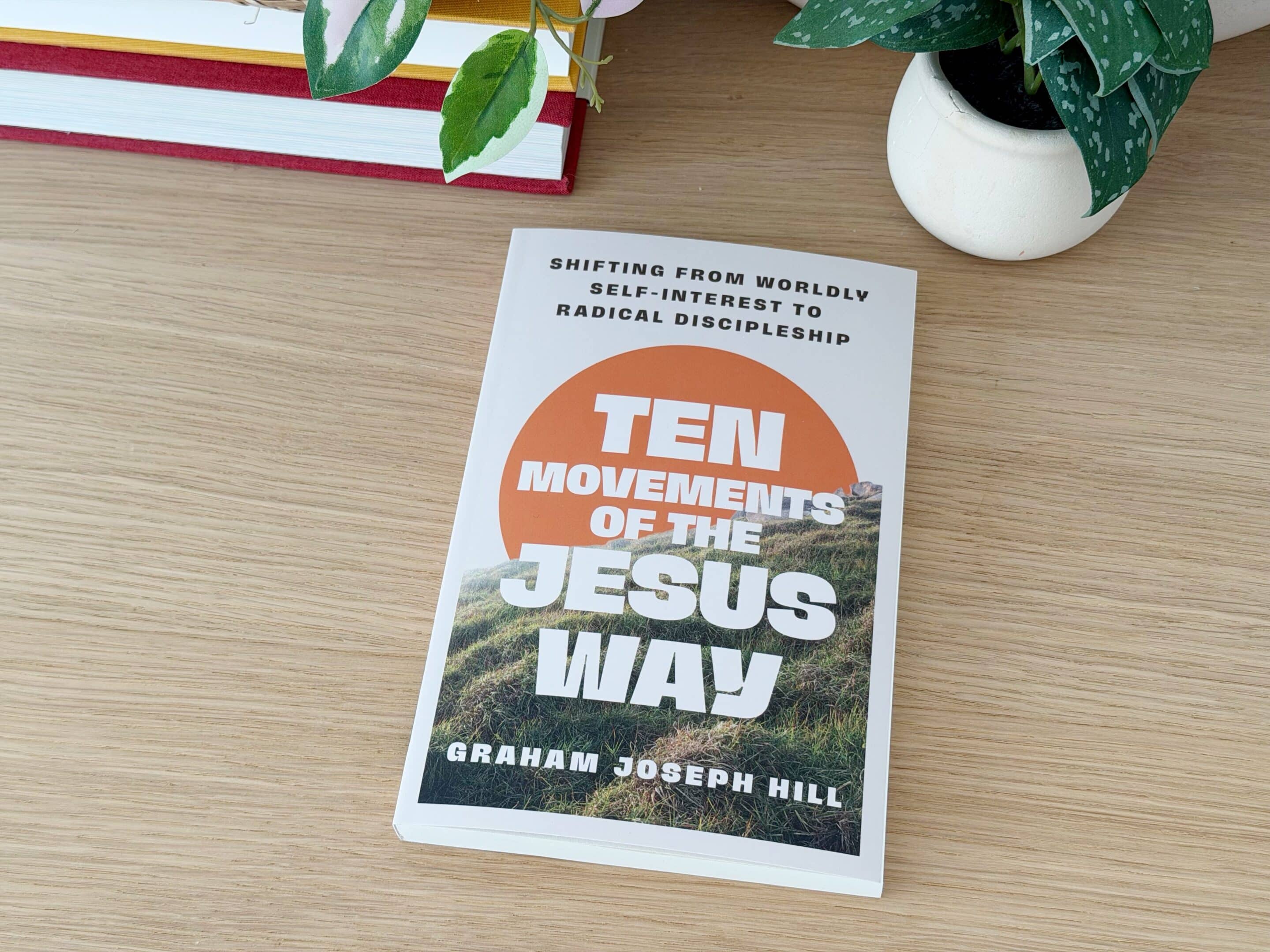
A new book for the journey: releasing July 28If something here has stirred you toward the way of Jesus, you might find a companion in my new book, Ten Movements of the Jesus Way: Shifting from Worldly Self-Interest to Radical Discipleship, releasing with IVP on July 28, 2026. We’re living in a fractured moment, pulled apart by political polarization, performative religion, consumerism, nationalism, and widening inequality. The book offers an alternative: the slow, countercultural, life-giving path of Jesus. Across ten movements, from material success to spiritual riches, from power to servanthood, from exclusion to embrace, it traces a discipleship shaped by humility, justice, generosity, and love. Rooted in Scripture and drawing on the wisdom of African, Asian, Indigenous, and Latin American Christian traditions, it’s a prophetic invitation back to the radical road Jesus walked, and a hopeful vision for a church longing to reflect Christ again. Every chapter closes with questions for reflection, making it a companion for personal devotion, book clubs, and small groups. Preorder your copy now at IVP, Amazon, Barnes & Noble, or Bookshop.org. Also available as an audiobook.
|
____________________________________________________________
Keep walking the Jesus Way: the podcastIf you’d like to go deeper, join me on The Graham Joseph Hill Podcast, where I explore the questions that matter most for Christians today through conversations about faith, justice, spirituality, theology, culture, and the global church. New episodes drop weekly. Listen and subscribe at – https://ghill8.podbean.com
|