My interview with Daniel Bourdanne (1959–2024) on renewing Christian humility, mission, and discipleship (for The Global Church Project) . . .
Hello, and welcome to The Global Church Project. I’m Graham Joseph Hill. Daniel Bourdanne was born in Chad. He served with IFES in Francophone Africa for decades, including overseeing the whole region, which encompasses twenty French-speaking countries. Daniel Bourdanne served as General Secretary of IFES and Deputy Director of the Lausanne Committee for World Evangelization. Daniel Bourdanne challenged churches to give their whole lives to Jesus Christ. He challenged us to pursue discipleship and mission, and to think about who our life belongs to. He once said, “Life is not granted. It belongs to God.”
You can read the tribute to his life here: https://ifesworld.org/en/the-gospel-embodied/
Graham Hill: As you travel, what’s your sense about the greatest challenges facing the church today?
Daniel Bourdanne: That’s quite a challenging question. From my personal perspective, I think some of the greatest challenges are internal ones. They aren’t the external, theological challenges, such as Islam or things like that. I have the sense that one of the greatest challenges is the church itself.
I think the church is like someone who has lost their teeth and so can’t bite. In my culture, you enjoy eating bones, and if your teeth aren’t in place, you can’t enjoy the bones. I’m using that image because I think the church has lost its teeth, and it isn’t as prophetic as it should be.
Everywhere I travel, my sense is that one of the greatest challenges for the church is to restore confidence in itself. It has the theology and it has the truth, but the church is no longer standing on the conviction of the uniqueness of Jesus. For me, this is the greatest challenge.
Related to that, the second challenge I can see is a sense of fear. I think maybe the two are connected. The church is fearful. It’s like somebody who has lost confidence in itself and can’t articulate their convictions and the truth.
The third thing is losing a significant element of joy. Again, maybe this is reading things from my African background, but when I visit a Gospel like the Gospel of Luke, I’m impressed by the number of times Luke uses the word joy. I think the Gospel is the Gospel of liberation, bringing joy to our lives, and it’s a message. It’s good news, and the good news is good news of joy.
With my African background, I look at the history of Africa, which went through different sorts of slavery, the Arab slavery and the Western slavery, and colonisation. Our history has always been a history of violence and of confrontation with other cultures. Then, having a sense of good news that makes you free, even if you aren’t joyful by nature, there’s a sense of excitement. I think the church has to recover that dimension of joy, which is exciting, which can communicate excitement and passion, and which can also communicate hope to the rest of the world.
For me, those are the main things I would see as the challenges. Of course, you can add to that the external challenges, like pluralism and so on. The world is redesigning itself culturally, and we don’t know what the future will be. It’s in process, and so it gives us a sense of insecurity, including theologically and from a missiological perspective. We are searching. Those are the kinds of challenges I can mention briefly.
Graham Hill: As you know, there’s been a lot of talk about what it means for the church to be missionary today. I think that conversation is happening in the West and also as a global conversation. If I asked you what the mission of the church is, how would you answer that question? What is the mission of the church, and how does it pursue that mission?
Daniel Bourdanne: Again, the church can’t have a mission of its own. The mission of the church is the mission of God. For me, it brings me to the heart of the gospel, which is the incarnational gospel: Jesus coming and living among us.
Even though we didn’t receive him, he still came down, leaving his privileges to be with us and to identify himself with us. For me, the mission of the church today is to recover the mission as expressed and demonstrated by Jesus himself, which is a mission of service. He said, “I come into this world not to be served, but to serve. I come not to be first, but to be a slave, and I come to die.”
That movement of going down, of not seeking to be first but being a slave and a servant and dying, should be the mission of the church today. It’s really for the church to be a servant of our world in different ways, and it involves much more than proclamation in an aggressive way, telling people they need to be saved.
Looking at the heart of the Gospel, things don’t end with the death of Jesus. There is a resurrection provided by God. So it suggests that God is actually helping us to do things in his way and not in the way of the world, serving the community, because he has the power to provide the resurrection to the church.
If the church isn’t ready to die, then the church won’t experience the miracle of the resurrection, because that is God’s power. We can’t change the world, but God is suggesting that our mission as a church is to make ourselves really available to the world, and he will bring the revival. I think we have to rediscover that mission of service to our communities.
Graham Hill: One of the challenges we seem to face today is making disciples in a global consumeristic society. How does the church go about making disciples today? What are some of the things the church needs to rediscover to do this well?
Daniel Bourdanne: There’s no easy answer, but personally I believe that discipleship is about our entire life. We need to rediscover the Gospel as a holistic gospel and to be there, and to move past a narrow focus on conversions and salvation. I think it’s important and vital, and it’s our first calling, to go out and invite people to meet Jesus and to be followers of Jesus. But we need to go beyond that.
One of the things coming out again and again in our African context is that you have this massive number of people converted to faith, but what kind of impact are they making in their communities and in their societies? Is salvation in Jesus leading them to make an impact? That question is raised, I believe, because our discipleship isn’t taking us deeper, to really live the entire life of Christ and to be salt and light. It’s a hard process. It needs us to question ourselves as a church about whether we’re doing the right things.
I also think that in that process we need to rediscover discipleship in families. I think we’re losing the battle of families as a place of discipleship in the churches. Maybe we’re becoming too individualistic and too busy with all sorts of things, and we’re not giving enough space. We tend to trade the discipleship to the church and to other organisations, and to leave it out of the context of our families. I think we need to come back and rediscover what it means to be a disciple in our context and in our family.
Graham Hill: When you see families doing discipleship well, discipling children and discipling each other, what are the kinds of things they’re doing as a family?
Daniel Bourdanne: I think being open as family members, because discipleship involves much more than teaching. Discipleship is about living it out. It’s like Jesus and his disciples working together. Even though Jesus is God and knows everything, from a human perspective he was also learning from the togetherness with the disciples.
So I imagine our families as a place where we can be accountable to one another, where we can explore the Gospel together, where we can ask hard questions, and where we can grow together. I think that is what I call discipleship. Discipleship is being together, exploring our faith in Jesus together, and growing together. My observation is that more and more Christians are losing that side of discipleship.
Graham Hill: You mentioned that discipleship is about the holistic development of the person. As evangelicals, we’re often good at engaging people’s minds. How do we go about helping people grow as disciples in their whole life?
Daniel Bourdanne: I think it’s about the whole life: the heart, the mind, and everything. I’m in this ministry with university students, and I always, or at least often, challenge them to connect their studies with their faith. It should be integrated. What does it mean for me to be a biologist and a Christian? If I’m unable to make that connection, then I’m doing poor discipleship for myself.
I need to be intentional in building the connection between where I stand and where I’m going, so that when I’m out in the marketplace I can really connect and engage, as part of the ecosystem and part of the community, and not as an external person who is coming into the marketplace. We need to understand discipleship in a very holistic way, in the sense that we integrate our heart, our emotions, and our mind, and make a clear connection between our faith and all the areas of life we’re engaged in.
Graham Hill: You’re African, and you travel all over the world, but you’re living in the UK at the moment. I’m really interested in what majority world Christians in Africa, Asia, South America, the Middle East, First Nations, and Indigenous communities can teach the Western church.
Daniel Bourdanne: One of the things is how the Western church can learn about being weak like Jesus. Even looking back in history, it seems to me that Jesus is moving to the fragile places. From the Jewish countries, in less than a hundred years he was already going among the Gentiles, who during that time were the weak and the fragile. Then he moved to the barbarians in Europe, and now he’s moving to places where poverty is predominant, and so on.
One of the things, from my view, is that when a society becomes too autonomous and independent, it gives no more place to Jesus and stops welcoming him. Then he goes where he can be welcomed. So one thing the Western church can learn is how we can make ourselves a place of humility to welcome Jesus. This is about our heart and the disposition of our heart, much more than about material possession. Are we humble enough to say that yes, we have everything here, and we still need Jesus? That can be a lesson to learn.
The second thing I would throw out is how we relate to spiritual things. I’m living in the West, and I identify myself with the Western churches too. The Enlightenment brought very good things into our life, leading to great progress, and we need to celebrate that progress. I think it comes from the Lord. At the same time, it makes us autonomous, and we become more and more blind to spiritual realities.
We no longer see engagement with the gospel as a spiritual combat, as a spiritual battle, and we’re losing that perspective. Maybe one thing we can learn from the global church is that the global church takes engagement with the gospel seriously as a spiritual combat. We need to learn how to pray, learn how to depend on God, learn how to depend on one another, and learn humility. I think this is something we can learn, and it’s related to suffering and to all sorts of things.
I’d also suggest, and I’m glad that Christians are starting to question the overemphasis on material possessions, that we need to learn again that the problem lies in the way possessions become our gods, much more than in the possessions themselves. We need to give space for God. Maybe we can have a slightly different perspective and say that these material possessions are a blessing from God, and they should keep leading us towards God. On the contrary, they should lead us to more acts of worship.
Finally, I’d suggest that maybe the church in the West should rethink how it reads the Bible, and realise that it holds no monopoly on good interpretation of the Bible. Maybe it can learn that other parts of the world can approach the Bible in a different way, and God is still able to speak to them. Again, this is maybe connected with the Enlightenment, which thinks that everything needs to be inductive and rational. You take the text, and if there’s a proposition here, you make a deduction, and this is how we read the Bible, and we’ve been shaped by that culture. I believe there may be other ways of listening to God as well, and we need to be open to learn and to explore together as a community whether we can be enriched by different approaches.
Very often I have the sense that from the Western perspective we quickly reject other ways of looking at the scripture, and we don’t even take the time. It needs time. I’m talking about decades here, well beyond five minutes. The way we’ve developed the biblical sciences took hundreds and hundreds of years. It’s about giving space, allowing space and freedom, and listening in order to learn together as a community how we can discern from God’s word in different perspectives.
Graham Hill: It would seem to me that it’s good for local churches to learn from global conversations, and for global churches to be fed by conversations happening at the local level as well. Have you seen examples of where that’s working well? Do you have any thoughts about how we might encourage those kinds of conversations, global and local, to enrich each other?
Daniel Bourdanne: I don’t have many spaces in mind right away where global conversations are taking place. In our ministry, IFES, we intentionally emphasise our diversity, theological diversity and cultural diversity, so it naturally creates a space for the students to explore.
When you look back, for example, during the Lausanne Congress in 1974, the emphasis on the holistic gospel was predominantly coming from Latin America. When you look at the people who were leading it, you have names like Samuel Escobar and René Padilla. They were involved in IFES. Even though the movement was smaller in those days, their connection with other people was able to shape them, to shape their theology, and to rethink it. I think we need more and more to be intentional in creating that kind of space. Lausanne could be a space like that, but we need more and more spaces like that.
And yet, one of the challenges the church is facing that I haven’t mentioned is the challenge of fragmentation. The church is so fragmented over some little issues, and those issues prevent us from building a real space of dialogue and discussion, engaging with the difficult things in order to grow together.
Graham Hill: How do we hold that tension together, of dialogue and diversity, theological and cultural, on the one hand, and the kind of inevitable slide towards conflict or fragmentation on the other? How do we deal with that tension that seems to emerge for us all the time?
Daniel Bourdanne: I think very often the tensions are important, and we need to maintain them, because at some point we need to be concerned about the integrity of the gospel, and that will lead to some tensions. They need to be healthy tensions. One of the issues is that we need to find some tools to manage the tension, and one of the tools, from my perspective a key tool, is leadership. We need to have leaders worldwide, Christian leaders, who can bring us together and absorb the tensions and create a space of trust so that we can dialogue.
Unfortunately, my sense is that we have very few of those kinds of leaders at this time, and so it’s difficult to manage the tension. It’s about the management of the tension, because the tension is healthy and it’s inevitable. We need to pray that God will raise up more and more global leaders who can help us to sit together around the key things about the gospel.
Most of us have a doctrinal base, at least in the evangelical community, and we can agree on some of the essential things regarding the gospel, even though we disagree on some things. Agreement about the essentials would help us to have a space for dialogue. For me it’s also a way of discipleship, because it helps me to live with my friend who is different from me. Even though my brother holds a different view on the role of women in leadership, we can still share something in common and actually advance the discussion on the involvement of women. This is how I see the way forward to manage the tension, a healthy tension.
Graham Hill: It seems like there are some spaces being created for evangelicals and Protestants to gather together across the globe, to discuss issues and to listen to each other. What is the role of listening to and dialoguing with other Christian traditions, Catholic, Orthodox, and so on? How does that play into all of this?
Daniel Bourdanne: Personally, I think the evangelical community needs to listen to other faiths. This is where security about our convictions comes in. Because our convictions feel insecure to us, we’re afraid to engage, and we engage from a perspective of fear. Therefore we’re very cautious in our engagement. It relates to that insecurity in our convictions.
I always make a difference between certainties and convictions. Certainties are fine as they are. What we need is to hold some convictions, because they are like an anchor for the ship, keeping us stable during difficult times. They may change, and we still need to hold those convictions and go into the engagement from a stable background. I believe there’s a place to engage with those faiths, dialoguing with them in a very positive way and contributing together.
Secondly, I think in the community there are some things in the area of the common good. Whether Protestant or Roman Catholic, there are some things like what happened in Rwanda and the idea of reconciliation. For me, that’s really the idea of the common good. I would love every single person in Rwanda to know Jesus, and at the same time I see the value of reconciliation in the community for its own sake. Maybe there are spaces to engage in the common good across the worldwide Christian family while each of us keeps holding our own convictions. This is how I see the engagement.
Graham Hill: Sometimes there’s a bit of debate about the relationship between the church and politics and secular organisations. What do you see as an ideal relationship between renewed missional churches and those secular institutions and groups?
Daniel Bourdanne: In fact, regarding secular institutions, even though I dislike the word secular, what is secular and what is spiritual? I hold a different view from that dualistic one, but I understand your perspective. Personally, I think that the world out there, or I would rather say the community, is the place where we can be salt and light, and that brings me back to the whole idea of the gospel. The gospel involves much more than our salvation. I’m saved, and then what next? How do I live out my faith, and where do I live out my faith?
The church is a place where I can build resources in order to go out. I see the church as a gas station for the believer, to get renewed, energised, and encouraged, in order to drive several miles in the wilderness, sometimes in the desert of a community that holds a different faith or none. I need to be there precisely to be salt and light in the public arena, in the media, and everywhere. We need Christians there who are well engaged.
At some point I wonder whether one of the reasons some Christians tend to leave the church is that, yes, they’re safe, but where is the place they have to live out their faith? If we encourage them to be engaged in their community and in politics and so on, and if we support them, they’ll find a new excitement in being Christians.
I have a little observation, and I’ll hold it loosely rather than draw conclusions from it. I think one of the reasons the church is growing in places like Africa is actually the place of lay people. In Africa, you’ll find very few church leaders who have been trained in a normal system, in a theological college and so on. They are believers, and they have to play a role. So the laity become an important part of their life, and they feel engaged and excited to contribute. They discover that their faith involves much more than their personal salvation, which is the foundation, and they ask, “Where do I move from that starting point? How do I grow? How will I engage with my pocket to support the ministry?” So the two things are in some ways interconnected, from my view.
Graham Hill: Are there practical things those churches are doing to empower people to be disciples in society? What are some of the things those churches are doing?
Daniel Bourdanne: They’re engaged a lot in development. Many of those churches are taking part in the wellbeing of the community they’re living in. They may establish a school somewhere, or a small hospital, often on a small scale.
I remember my wife, who is a gynaecologist and obstetrician. We were living in a city in West Africa, and it’s difficult for poor women to have access to a specialist. There are very few of them, and it costs a lot of money. She decided that she would offer her service as a Christian to the poor community, and it had such an impact. Both my wife and the community benefited. It became a discipleship process and brought excitement to my wife, and she said, “My Christian values can add value to the community.” Those kinds of engagement are the kinds of things they’re doing, helping the community, being present, and offering hospitality. Hospitality is a key thing, and those are the kinds of things they’re trying to do.
Graham Hill: You mentioned that in places like Africa, maybe one of the keys to the growth of the church is the way in which lay people are empowered to serve.
Daniel Bourdanne: Women. Women, yes.
Graham Hill: What does all this mean for the way we develop people for ministry, and train and develop people for ministry? By that I mean the whole church for ministry, and not only professional pastors.
Daniel Bourdanne: I think we need to revisit the way the church is becoming too professional. I need to pause here, because I may say some challenging things.
Graham Hill: No, that’s good.
Daniel Bourdanne: My sense is that the church of God tends to grow in a more chaotic setting. It seems to me that God cares most about our faithfulness and our heart, about being rather than doing, about who we are, and that our professionalism matters far less to him. I can understand the pressure of our society, which invites us to be more and more professional.
I want us to make a difference between doing our best for God and being professional. Seeking excellence for God is something we as believers are always invited to, because it’s an act of worship. It comes from our heart. There’s a nuance between seeking excellence and being too professional. We tend to professionalise the ministry too much, and I think that gets in the way of participation and contribution.
Again, looking across the line, one of the reasons the Pentecostal churches are growing is maybe also that everyone can pray in the church. It seems to be chaotic sometimes, but what it brings is the suggestion that everyone has the freedom to participate. So we need to look beyond the chaos in the church’s service. I may feel uncomfortable in that setting at times, and the lesson I’m picking up is that it allows every single member of the community to participate.
Praying and standing in the church carries more weight than we can think of. Inviting people to participate may produce something other than the order you want to see. It may be a little chaotic. But if that helps people to feel part of the kingdom, why not? If we’re people who believe in heaven, and if we’re as evangelicals the people of hope, we know the time will come when the order we’re seeking will be present, when Jesus is with us around the table. We need to have that eschatological perspective in our mind when we see a little chaos for the time being.
Graham Hill: I really appreciate the time you’ve given us today to share something of your passion for Jesus, for mission, for the church, and for theology. I hope the rest of your trip here in Sydney is a good one.
Daniel Bourdanne: Thank you very much.
Graham Hill: Thank you.
The Global Church Project is located at https://grahamjosephhill.com/worldchristianity/. On our website you’ll find a wide range of interviews and resources for colleges, universities, and churches. I look forward to your company next time. From me, goodbye.
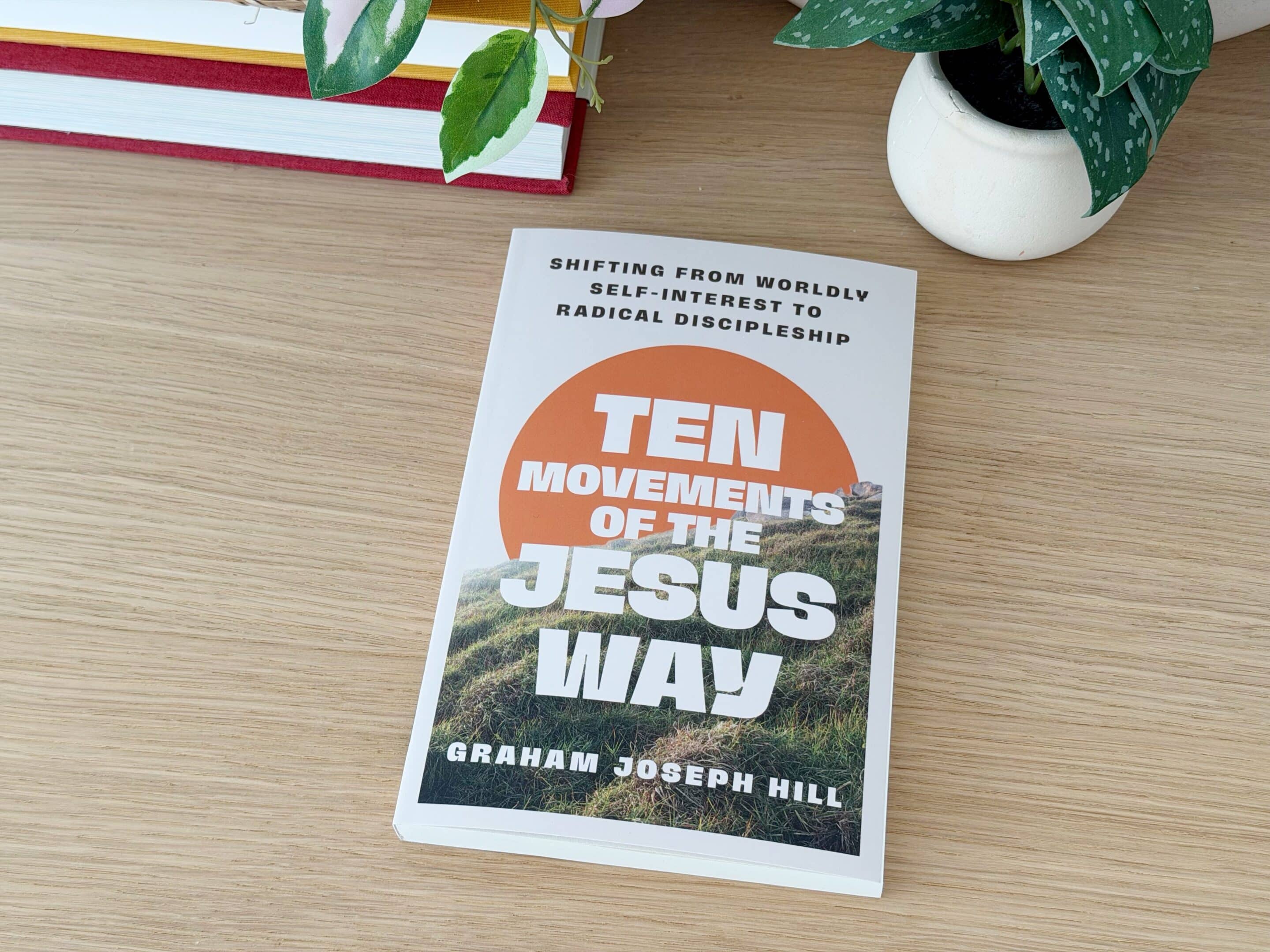
A new book for the journey: releasing July 28If something here has stirred you toward the way of Jesus, you might find a companion in my new book, Ten Movements of the Jesus Way: Shifting from Worldly Self-Interest to Radical Discipleship, releasing with IVP on July 28, 2026. We’re living in a fractured moment, pulled apart by political polarization, performative religion, consumerism, nationalism, and widening inequality. The book offers an alternative: the slow, countercultural, life-giving path of Jesus. Across ten movements, from material success to spiritual riches, from power to servanthood, from exclusion to embrace, it traces a discipleship shaped by humility, justice, generosity, and love. Rooted in Scripture and drawing on the wisdom of African, Asian, Indigenous, and Latin American Christian traditions, it’s a prophetic invitation back to the radical road Jesus walked, and a hopeful vision for a church longing to reflect Christ again. Every chapter closes with questions for reflection, making it a companion for personal devotion, book clubs, and small groups. Preorder your copy now at IVP, Amazon, Barnes & Noble, or Bookshop.org. Also available as an audiobook.
|
____________________________________________________________
Keep walking the Jesus Way: the podcastIf you’d like to go deeper, join me on The Graham Joseph Hill Podcast, where I explore the questions that matter most for Christians today through conversations about faith, justice, spirituality, theology, culture, and the global church. New episodes drop weekly. Listen and subscribe at – https://ghill8.podbean.com
|