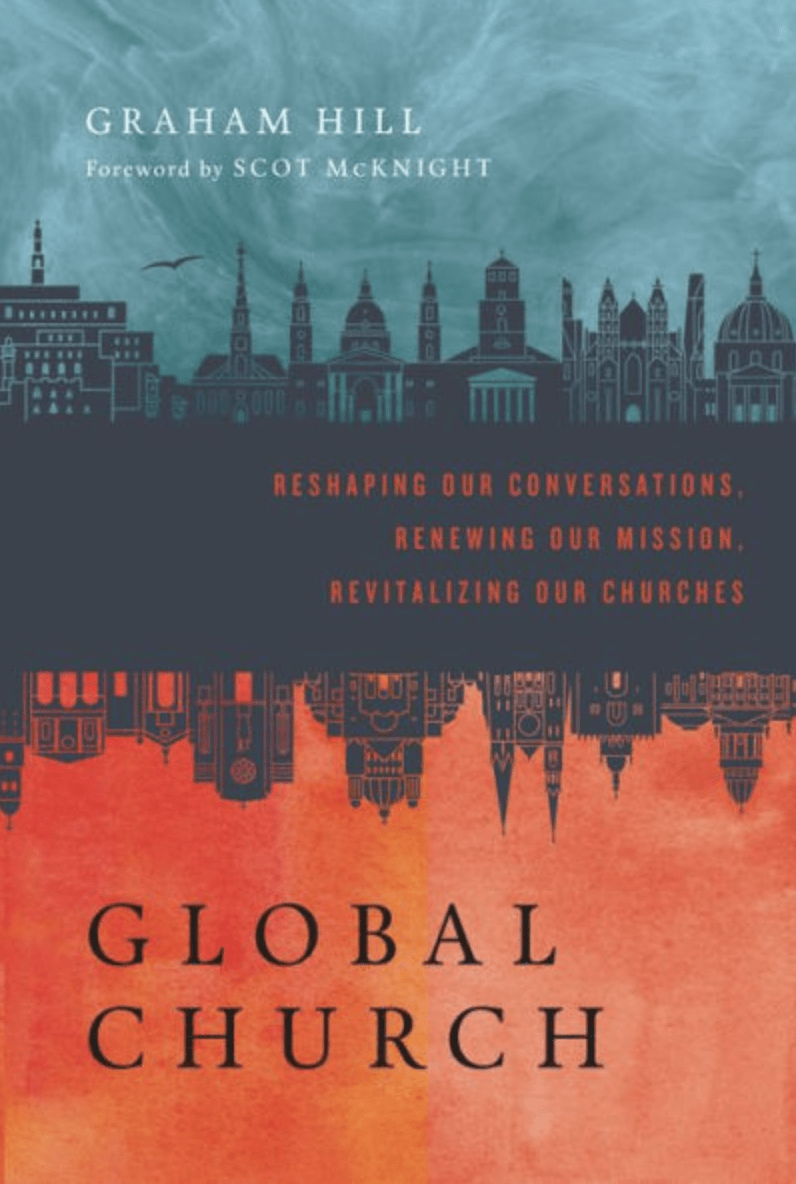
There’s a phrase that has crept into the way we talk about faith, and the casualness of it hides something worth examining. We say we are “church shopping.”
Borrowed straight from the mall, that vocabulary turns a congregation into a showroom. We visit the way we test-drive a car. We sample the music, weigh the preaching, assess the children’s program, note the quality of the coffee and the warmth of the greeters. We compare. And when one falls short of our preferences, we move on to the next, hunting for the place that fits us best, the community that meets our needs, the experience that suits our taste.
There’s nothing obviously wrong with wanting to find a healthy church. The instinct to seek a good community makes sense. And underneath the shopping language lies an assumption so common that we rarely notice it: that the church exists to serve our preferences, and that we are its customers, free to take our business elsewhere when the product disappoints.
Contemplatives and saints would have found that assumption strange to the point of bewilderment. They knew the church as something else entirely. They knew it as a body to be joined, a living communion into which we are baptised, flawed and glorious all at once. They understood that we are saved, in part, by being bound to people we did not choose.
The Water We Swim In
Consumerism is the air of our age, and it has seeped into places we would never expect to find it.
We have been formed, all of us, by a culture that treats us first as consumers. From our earliest years we are taught to define ourselves by our choices, to express our identity through what we buy, to expect that the world will arrange itself around our wishes. The market has trained us to believe that satisfaction is the highest good and that we are owed it on demand.
When this mindset enters the life of faith, it reshapes everything. Worship becomes a product evaluated by how it makes us feel. Community becomes a transaction we enter for what we can extract from it. Belonging becomes conditional, hanging on the continued satisfaction of our needs. And the moment a community disappoints us, bores us, or asks something of us we would prefer not to give, we feel entitled to leave, certain that a better option waits down the road.
Most of this cost goes unseen, and it runs deep. A church full of consumers is a church full of people keeping their options open, holding back the deep commitment that alone makes transformation possible. Formation requires a community you are willing to stay inside. Being truly known requires setting down the distance of the customer. The shallow roots of the church shopper draw up little, while the living water flows freely to the ones who stay.
The Body That Holds Us
Here is the vision the consumer age has caused us to forget.
The church, in the oldest and truest understanding, is the Body of Christ. This phrase names the deepest reality of what the church is. We are members of one another, joined as a hand is joined to an arm, as an eye is joined to a face. The life of Christ flows through the whole body, and no part can say to another, “I have no need of you.”
Seen rightly, the church is a living organism we belong to, far more than an institution we attend. When we are baptised, we are grafted into something larger than ourselves, a communion that stretches across continents and across centuries, gathering into one body the whole company of the redeemed.
And the company is vast. The communion of saints holds the people in the pew beside us this Sunday, and it holds the great cloud of witnesses who have gone before: the martyrs and the contemplatives and the ordinary faithful of every age, the whole luminous procession of those who have loved God and been loved by God across the long centuries. When we gather to worship, we join a song that has been rising for two thousand years and will go on long after we fall silent.
You cannot shop for this. It comes to us as a gift, receiving us into itself, and we learn, slowly, to give ourselves to it in return.
Those Who Loved the Church in Its Brokenness
The saints understood something we find difficult. They held loving the church and grieving its failures together, in a single heart, at the very same time.
Consider Catherine of Siena, who lived in the fourteenth century when the papacy had abandoned Rome and corruption ran through the church like rot through timber. Catherine saw the failures with clear eyes and named them with prophetic boldness, writing letters to the Pope that still crackle with holy urgency, demanding reform, calling the leaders of the church back to faithfulness. And Catherine never left. The love and the rebuke came from the same fierce heart. Catherine stayed inside the church precisely in order to call it home.
Consider Dorothy Day, who founded a movement among the poor in the twentieth century and gave a lifetime to serving the forgotten. Dorothy Day knew the institutional church’s failures intimately: its compromises with wealth and power, its frequent blindness to the suffering at its own doorstep. And Dorothy Day remained, faithfully, to the end, receiving the sacraments, loving the church as the place that had given spiritual birth and went on feeding a hungry soul. The commitment held through every disappointment.
Consider the monastics, who bound themselves by vow to a single community for life. They did not choose the brothers and sisters of the cloister. They were given to one another. And in the daily friction of life with people they would never have selected, in the irritations and the misunderstandings and the slow labour of learning to love the unlovely, they discovered the very furnace where holiness was forged. Stability, they called it. The vow to stay.
What these witnesses share is a refusal to treat the church as disposable. They loved a flawed and failing community. They stayed because they understood that this was where God had placed them, and that staying was the road to becoming who God was calling them to be.
Commitment Over Preference
So here is the invitation, spoken into a culture that has made preference into a kind of god: commit.
Choose a community, and stay in it. Stay when the music grates. Stay when the preaching disappoints. Stay when someone bruises your feelings, when the programs are mediocre, when a shinier option seems to beckon from across town. Stay long enough to be known, long enough to be formed, long enough for the shallow roots to grow deep and begin to draw up living water.
This does not mean staying in a community that is truly abusive, or one that demands the surrender of your conscience. Wisdom and safety matter, and there are seasons when leaving is the faithful thing to do. The call to commitment is a call away from the consumer’s reflexive restlessness, the itch to leave the moment our preferences go unmet.
Only the ones who stay receive the deepest gifts of the church. The friendships that take decades to ripen. The transformation that arrives only through the long friction of committed life together. The slow discovery that the people you did not choose have become, across the years, your family, your teachers, the very means of your healing.
The Long Belonging
You were made to belong to the church, to take your place in the Body, to add your voice to the song the saints have been singing since the morning of the faith.
Find your place in the communion. Give yourself to a particular, flawed, ordinary community of people. Stay through the seasons when staying is hard. And discover, as the contemplatives and the activists discovered before you, that the church you cannot return like a disappointing purchase becomes the very place where, held by people you did not choose, bound to a body larger than yourself, you are slowly and surely made whole.